


The Export Journey: How Indian Rugs Reach Global Markets
- pihue sagar
- Oct 11, 2025
- 4 min read

India’s carpets and rugs have long been admired for their craftsmanship, cultural heritage, and timeless appeal. From royal palaces to luxury hotel rugs and contemporary home rugs, Indian handmade carpets have earned their place in interiors worldwide. But behind every rug that adorns a living room in New York or a hotel in Dubai lies an incredible journey — one that begins in the heart of India’s weaving clusters and ends at the doorsteps of international buyers.
This is the story of how Indian rugs travel from loom to luxury.

1. The Craftsmanship Begins: From Design to Loom
The export journey of Indian rugs starts with creativity and craftsmanship. In centers like Bhadohi, Varanasi expert artisans transform natural fibers like wool, silk, and jute into exquisite pieces of art.
Each rug begins with a concept — often a blend of traditional patterns and modern aesthetics. Indian rug manufacturers and OEM rug suppliers work closely with international designers and brands to create custom designs suited for global tastes. Whether it’s a hand knotted wool rug, a luxury silk carpet, or a modern flatweave rug, each piece carries the distinct signature of India’s weaving excellence.
Many Bhadohi rug manufacturers and carpet weaving companies in India use advanced digital design tools alongside traditional techniques, ensuring perfect harmony between heritage and innovation. This balance is what makes Indian carpets both timeless and globally relevant.
2. Sustainable Sourcing: Ethical and Eco-Friendly Production
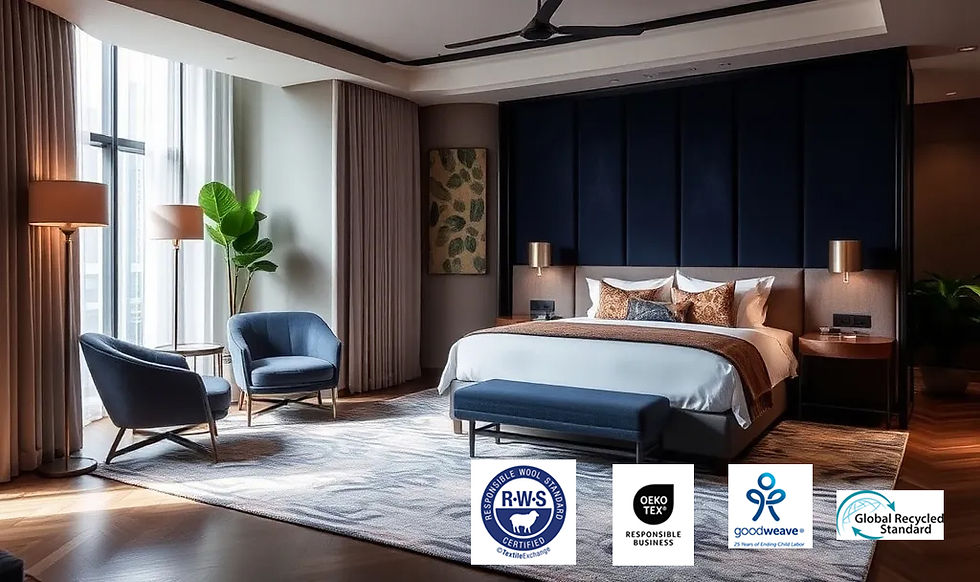
Modern rug buyers are increasingly conscious about sustainability and ethics — and India’s manufacturers have embraced this shift. Many certified carpet exporters and GoodWeave-certified rug exporters adhere to strict ethical standards, ensuring child-labor-free, fair-trade, and eco-friendly production processes.
Sustainability starts at the material level. Eco-friendly rug exporters in India often use organic wool, natural silk, and vegetable dyes to create carpets that are not only beautiful but also gentle on the environment. In Bhadohi, for instance, sustainable rug manufacturing combines traditional hand-knotting with responsible dyeing and water recycling processes.
As a result, buyers can now source luxury rugs that reflect both craftsmanship and conscience — a perfect fit for modern interiors that value sustainability as much as style.
3. From Loom to Warehouse: The Production and Quality Process
Once weaving begins, it can take weeks — sometimes months — to complete a single hand-knotted carpet. The meticulous process involves multiple stages: dyeing, weaving, trimming, washing, stretching, and finishing.
Indian handmade rug exporters follow strict quality control measures at every step. Export-quality Indian carpets are checked for knot density, color accuracy, durability, and texture. In Bhadohi carpet factories, experienced supervisors ensure that every rug meets international standards before it leaves the production floor.
Many luxury rug manufacturers in India also provide private label rug production and contract rug manufacturing services for global brands. This allows overseas clients to receive customized products — from pattern to packaging — all crafted under one roof.
4. Export Preparation: Packaging, Certification & Documentation
After quality approval, the next phase involves preparing rugs for export. Proper packaging is crucial to ensure the carpets remain pristine during transit. Rugs are rolled, wrapped in protective layers, and sometimes vacuum-sealed to reduce volume and shipping costs.
As a CEPC-approved rug exporter, each manufacturer ensures that documentation such as Certificates of Origin, inspection reports, and GoodWeave certificates are in order. These credentials assure buyers that their rugs are ethically produced and of authentic Indian origin.
5. Logistics and Global Shipping
India’s rug exports are supported by strong logistics infrastructure. From Bhadohi, rugs travel via road to major ports like Mumbai, Chennai, or Kolkata, where they are shipped to destinations across North America, Europe, the Middle East, and Asia-Pacific.
B2B carpet sourcing networks and bulk area rug exporters manage international shipping using reliable freight partners. Many exporters also offer factory-direct rug sourcing, which reduces middlemen costs and ensures competitive pricing for buyers.
Thanks to this streamlined system, India remains one of the world’s top suppliers of handmade carpets — connecting artisans directly with global markets.
6. Global Reach: Indian Rugs in International Projects
From boutique hotels to high-end residential spaces, Indian hand-knotted rugs are featured in projects across the world. Hotel project rug suppliers and commercial carpet exporters in India provide large-volume, custom-designed rugs tailored to hospitality interiors.
Luxury design firms prefer working with OEM rug suppliers in India due to their flexibility in size, material, and pattern customization. Whether it’s a Abaca rug for a desert resort in Dubai or a geometric wool rug for a Manhattan penthouse, Indian rug manufacturers can deliver at scale — while maintaining artistry.
7. The Role of Export Promotion Councils
The Carpet Export Promotion Council (CEPC) plays a key role in connecting Indian exporters with global buyers. Events like the India Carpet Expo attract importers, wholesalers, and interior professionals from around the world.
Through these trade fairs, Indian Dhurrie exporters, handmade carpet exporters, and Bhadohi rug suppliers showcase the diversity of India’s weaving traditions — from modern abstract rugs to traditional Persian-inspired rugs.
Such initiatives ensure continuous global exposure for Indian manufacturers, reinforcing India’s reputation as a trusted hub for rug exports.
8. The Future of Indian Rug Exports
As global demand for sustainable, luxury handmade carpets grows, India’s rug industry is poised for even greater success. The integration of digital design, eco-friendly practices, and efficient B2B logistics has made Indian exporters more competitive than ever.
Buyers seeking authentic craftsmanship, ethical production, and design flexibility find unmatched value when sourcing directly from India’s factories — particularly Bhadohi, known as the “Carpet City of India.”
From artisan hands to global homes, the journey of an Indian rug is a story of passion, precision, and purpose. Every weave carries the legacy of a craft perfected over centuries — one that continues to connect India’s heritage with the world’s modern interiors.


Comments