


Does GoodWeave Rug Certification Cover Environmental Standards Too for Rug Manufacturers?

In today’s conscious global marketplace, certifications play a critical role in guiding buyers toward ethical and responsible choices. When it comes to rugs, one of the most recognized names is GoodWeave International. Known primarily for its commitment to ending child labor in the rug industry, GoodWeave has become a trusted benchmark for ethical production. But a common question among buyers and designers is: does this certification also address environmental standards?
The answer is nuanced. While GoodWeave’s core mission is social compliance, its framework increasingly intersects with sustainability practices, making it highly relevant for those seeking both ethical and environmentally responsible rugs.

Understanding the Core Purpose of GoodWeave
GoodWeave certification was originally established to eliminate child labor and ensure fair working conditions in rug production. Manufacturers that meet its standards undergo rigorous inspections and monitoring, ensuring transparency across the supply chain.
For buyers sourcing from Good Weave certified rug manufacturers, this certification guarantees that the rugs are produced under ethical conditions. It also supports educational programs and community development initiatives for weavers and their families.
However, GoodWeave’s primary focus remains social responsibility rather than direct environmental regulation. This distinction is important when evaluating its role in sustainability.
Where Environmental Responsibility Fits In
Although GoodWeave does not function as a full environmental certification, it indirectly promotes sustainable practices. Ethical production often overlaps with environmentally conscious methods, particularly in traditional rug-making processes.
For instance, many Handmade rugs produced under GoodWeave standards rely on low-impact techniques. Unlike mass manufacturing, hand weaving consumes less energy and reduces industrial waste. This naturally aligns with eco-friendly values, even if it is not the certification’s main objective.
Additionally, GoodWeave encourages transparency in sourcing and production, which can lead manufacturers to adopt cleaner and more responsible practices over time.
Complementing GoodWeave with Environmental Certifications
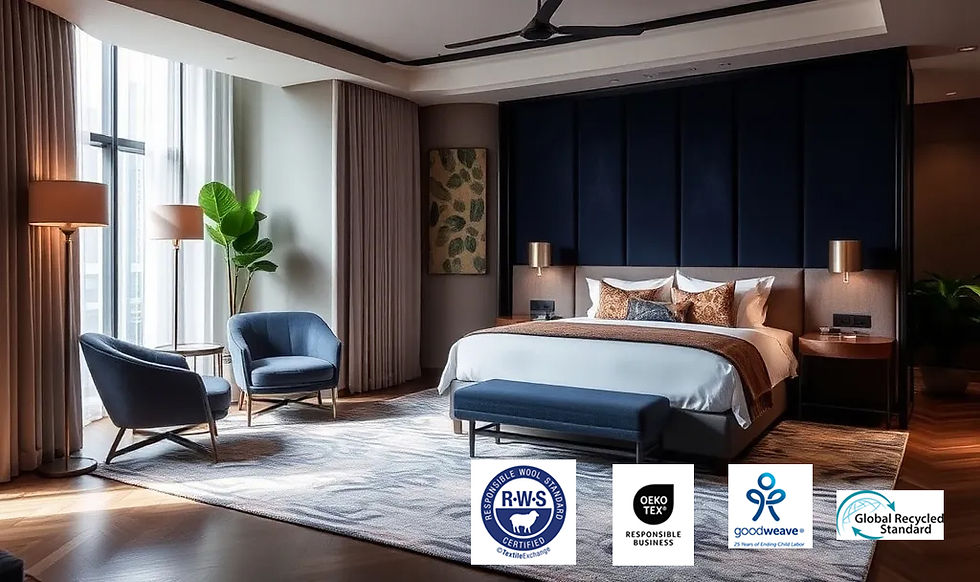
To fully address environmental concerns, many manufacturers combine GoodWeave certification with other standards. One of the most recognized is OEKO-TEX, which focuses on testing textiles for harmful substances.
By offering Oeko-Tex® Certified rugs, manufacturers ensure that their products are safe for both consumers and the environment. This certification directly addresses chemical safety, making it a strong complement to GoodWeave’s social focus.
Together, these certifications provide a more holistic assurance—covering both ethical labor practices and environmental safety.
The Role of Natural Materials
Sustainability in rug manufacturing is also deeply connected to material choices. Many ethically produced rugs use renewable and biodegradable fibers, contributing to the growing demand for Sustainable rugs.
Options like Jute rugs and Hemp rugs are particularly popular due to their minimal environmental impact. These materials require less water and fewer chemicals during cultivation, making them ideal for eco-conscious buyers.
Similarly, Abaca rugs are valued for their durability and natural origins, offering a balance of strength and sustainability. When combined with ethical certifications, these materials enhance the overall value of the product.
Artisan Craftsmanship and Environmental Impact
The shift toward Artisan made rugs is another factor that supports sustainability. Traditional weaving techniques often rely on manual labor rather than energy-intensive machinery, reducing the carbon footprint of production.
Artisan craftsmanship also promotes longevity. High-quality rugs are designed to last for years, even decades, reducing the need for frequent replacements. This durability is a key aspect of sustainable consumption.
By choosing ethically made, handcrafted rugs, buyers contribute to a system that values both people and the planet.
Customization and Conscious Consumption
The rise of Custom rugs has also influenced sustainability in the industry. Made-to-order production minimizes waste, as rugs are created specifically to meet customer requirements rather than being mass-produced.
This approach not only reduces excess inventory but also ensures that materials are used efficiently. For environmentally conscious buyers, customization offers a way to align design preferences with responsible consumption.
Bhadohi: A Hub for Ethical and Sustainable Rugs
India’s Bhadohi region, often referred to as the carpet capital of the country, plays a significant role in the global rug industry. Many Bhadohi rug manufacturers have adopted GoodWeave certification, ensuring ethical production standards.
At the same time, these manufacturers are increasingly integrating sustainable practices into their operations. From using natural dyes to sourcing eco-friendly materials, they are responding to the growing demand for responsible products.
This combination of tradition, ethics, and innovation positions Bhadohi as a key player in the future of sustainable rug manufacturing.
What Buyers Should Look For
For buyers seeking rugs that meet both ethical and environmental standards, it is important to look beyond a single certification. While GoodWeave ensures fair labor practices, additional certifications and material choices provide a more complete picture.
Key factors to consider include:
The presence of complementary certifications like Oeko-Tex
Use of natural and renewable fibers
Transparency in sourcing and production
Commitment to artisan craftsmanship
By evaluating these aspects, buyers can make informed decisions that align with their values.
The Bigger Picture
The growing interest in Eco-friendly rugs reflects a broader shift in consumer behavior. People are no longer just looking for beautiful products—they want items that are ethically made and environmentally responsible.
While GoodWeave may not directly certify environmental standards, its emphasis on transparency and ethical production creates a strong foundation for sustainability. When combined with other certifications and responsible practices, it becomes part of a larger ecosystem that supports both social and environmental well-being.
Conclusion
GoodWeave certification plays a vital role in ensuring ethical labor practices within the rug industry. Although it does not explicitly cover environmental standards, it often overlaps with sustainable methods, particularly in handmade and artisan production.
For buyers and designers, the key is to view GoodWeave as one piece of the puzzle. By pairing it with environmental certifications and choosing natural materials, it is possible to source rugs that are both ethically produced and environmentally friendly.
In a world increasingly focused on responsible consumption, this balanced approach allows rug manufacturers and buyers alike to contribute to a more sustainable future—one knot at a time.


Comments