


How Rug Manufacturers Can Serve the Growing Wellness Tourism Market

The global wellness tourism market is experiencing unprecedented growth. Valued at over $1.06 trillion in 2026**, it is projected to reach **$2.16 trillion by 2035, growing at a compound annual rate of 8.2%. This is not a passing trend—it is a fundamental shift in traveller expectations. Today's guests no longer seek just a comfortable bed. They want holistic environments that nurture mental clarity, physical restoration, and emotional balance.
For rug and carpet manufacturers from Bhadohi, this represents a significant opportunity. Floor coverings are no longer mere finishing touches; they are foundational elements of the wellness experience. Here is how manufacturers can position themselves to serve this rapidly expanding market.

The Wellness Traveler’s Floor-Level Expectations
Wellness travellers are discerning. They notice what is underfoot. Hotels and resorts that cater to this demographic are moving beyond generic amenities to create immersive environments where every surface contributes to the guest's sense of well-being. The floor is the first point of physical contact, and its texture, material, and temperature send an immediate signal to the nervous system. A cold, hard floor says "functional." A soft, warm, natural surface says "welcome, relax, stay."
This is where premium rugs and carpets become strategic assets. They are not just decor; they are tools for creating a sensory experience that aligns with the wellness promise. Manufacturers who understand this distinction can differentiate themselves in a competitive market.
Natural Fibers: The Foundation of Wellness Flooring
Wellness design prioritises materials that are natural, non-toxic, and grounding. Natural fiber rugs are at the heart of this movement. They offer tactile warmth, regulate temperature, and bring the outdoors inside—a principle central to biophilic design.
Jute rugs are a particularly compelling option for wellness spaces. Jute is a fast-growing, renewable plant fibre that is biodegradable and requires minimal chemical processing. Its earthy, textured surface provides a grounding sensation underfoot, ideal for yoga studios, meditation spaces, and spa lounges. Wool rugs offer another layer of wellness benefits. Wool is naturally flame-retardant, stain-resistant, and insulating. It absorbs sound, reducing noise pollution, and regulates humidity, creating a more comfortable indoor environment. For spaces that demand a touch of luxury, handmade rugs crafted from these natural materials carry the added value of artisanal tradition—a story that resonates with wellness travellers seeking authenticity.
Handcrafted Quality for Authentic Experiences
The wellness traveller values authenticity. They are drawn to experiences that feel genuine, not manufactured. This is where hand-knotted rugs and hand-tufted rugs excel. Each piece is unique, carrying the subtle variations that signal human craftsmanship. A hand-knotted wool rug in a boutique hotel lobby tells a story of skill and patience that a machine-made carpet cannot replicate.
For manufacturers, this means investing in artisan training and preserving traditional weaving techniques. It also means communicating the story behind the rug—the hands that made it, the community that supports it, and the heritage it represents. This narrative adds value and differentiates products in a crowded market. Carpet manufacturers from India, with their deep weaving heritage, are particularly well-positioned to meet this demand.
Zoning for Wellness: Strategic Placement
Wellness resorts are increasingly designed as multi-zone environments, each serving a different restorative function. Lobby rugs set the tone for the entire property—they should be welcoming, calming, and durable enough to withstand high traffic. Area rugs in lounges and reading nooks create intimate pockets of comfort. Runner rugs in corridors guide guests through the space while adding acoustic insulation.
In guest rooms, bedroom rugs provide a soft landing for bare feet. In private spa suites, private space rugs enhance the sense of seclusion and luxury. Each zone requires a different approach to material, pile height, and design. Manufacturers who can offer a comprehensive range, from durable lobby carpets to plush bedroom rugs, are better equipped to serve wellness resorts.
Sustainability and Certifications
Wellness and sustainability are inextricably linked. Wellness travellers are often environmentally conscious, and they expect the spaces they inhabit to reflect that value. Manufacturers serving this market must prioritise sustainable practices: using renewable materials, minimising waste, and ensuring ethical labour conditions.
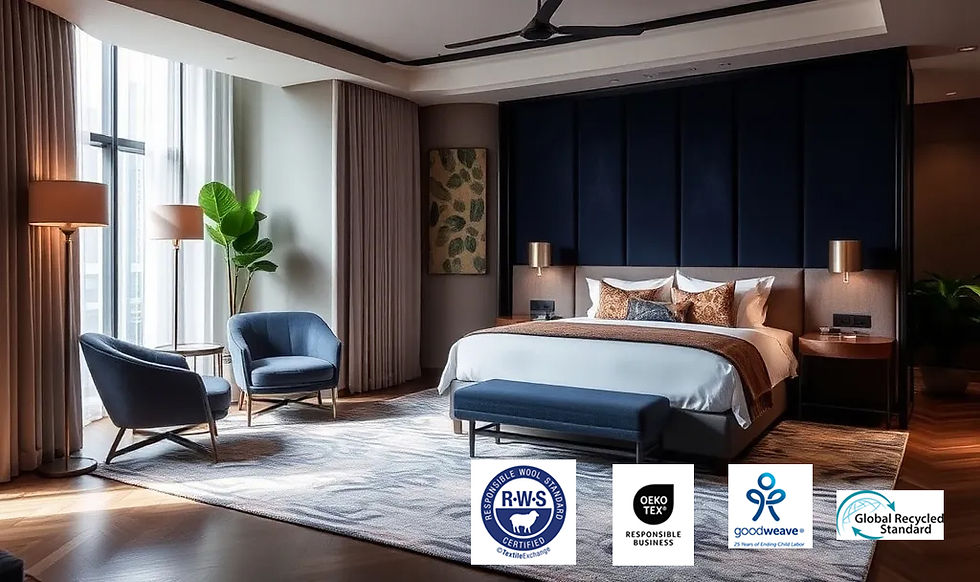
Certifications such as GoodWeave, OEKO-TEX®, GRS, and RWS provide verifiable proof of these commitments. They reassure hoteliers and guests that the rug underfoot was made with respect for people and the planet. For manufacturers, these certifications are not just marketing tools; they are essential credentials for doing business in the wellness sector.
Partnering with Wellness Resorts
To effectively serve this market, rug manufacturers must move beyond being passive suppliers. They should become active partners in the design and development process. This means understanding the wellness philosophy of each resort, offering custom solutions that align with that vision, and providing expert guidance on material selection, durability, and maintenance.
Manufacturers should also stay informed about emerging wellness trends. The rise of "sleep tourism," nature-based wellness activities, and holistic health programming all present opportunities for innovative flooring solutions. A manufacturer who can offer a rug specifically designed for a meditation pavilion or a hypoallergenic carpet for a wellness suite will have a competitive edge.
The Bottom Line
The wellness tourism market is not a niche; it is a major and growing force in global hospitality. For rug and carpet manufacturers, it represents a significant opportunity to move beyond commodity sales and become providers of authentic, high-value experiences. By focusing on natural materials, handcrafted quality, strategic zoning, and verified sustainability, manufacturers can position themselves as essential partners in the creation of restorative spaces. In the wellness economy, the floor is not just where you stand—it is where you begin your journey to well-being.
Working with a certified carpet manufacturer in India ensures quality, ethics, and reliable delivery for every project.


Comments