


Made-to-Order Rugs: Benefits for Designers & Architects

In today’s design landscape, originality and precision matter more than ever. Designers and architects are increasingly expected to create spaces that feel intentional, cohesive, and deeply personal. Flooring plays a foundational role in achieving this vision, which is why made-to-order rugs have become a preferred solution for professionals working on residential, commercial, and hospitality projects worldwide.
Unlike off-the-shelf options, custom rugs allow creative control at every stage—offering flexibility in scale, color, texture, and construction while aligning perfectly with a project’s architectural language.

Design Freedom Without Compromise
For design professionals, one of the greatest challenges is finding a rug that fits both the physical dimensions and the conceptual vision of a space. Made-to-order programs eliminate this limitation. Whether designing a sculptural penthouse or a refined corporate environment, bespoke rugs ensure harmony between furniture layouts, circulation flow, and visual balance.
Rather than adjusting a design to fit a product, architects and designers can shape the rug itself—selecting proportions, finishes, and weaving techniques that enhance spatial clarity and aesthetic intent.
Material Choice as a Design Tool
Material selection significantly influences both performance and atmosphere. Natural fibers are often favored for their tactile richness and longevity. Jute rugs offer organic texture ideal for grounded, earthy interiors, while kilim rugs bring flatwoven precision suited to layered or transitional spaces. For projects inspired by cultural craftsmanship, moroccan rugs and persian rugs provide heritage-driven design references that can be subtly reinterpreted for contemporary settings.
Each material communicates a different mood—allowing designers to reinforce the emotional tone of a space without overwhelming it.
Precision in Craft and Construction
Handcrafted production enables a level of detail that mass manufacturing cannot replicate. Hand made rugs are created by skilled artisans who understand tension, density, and finishing at a granular level. Depending on functional requirements, designers may choose hand tufted rugs for faster timelines and sculpted textures, or hand knotted rugs for longevity and fine detailing.
For projects where permanence and legacy matter—such as private residences or cultural institutions—heirloom rugs offer lasting value, aging gracefully while maintaining structural integrity over decades.
Tailored Solutions for Professional Spaces
Commercial and workplace environments demand flooring that balances durability with design sophistication. Made-to-order solutions allow office rugs to be engineered for acoustic comfort, foot traffic resilience, and brand alignment. Color palettes can be calibrated to corporate identities, while textures support a professional yet welcoming atmosphere.
In contrast, hospitality or lifestyle-driven spaces may benefit from tactile options like shag rugs, which add softness and comfort in lounges, suites, or collaborative zones—without sacrificing customization.
Supporting Interior Design Narratives
Rugs often serve as the unifying element in a room, anchoring furniture and guiding visual flow. Custom production allows interior rugs to complement architectural materials such as stone, wood, or metal while reinforcing spatial zoning. This level of coordination is especially valuable for interior designers working on multi-room projects where continuity is essential.
By controlling color saturation, pattern scale, and texture depth, designers can ensure the rug enhances rather than competes with surrounding elements.
Contemporary Design, Responsibly Made
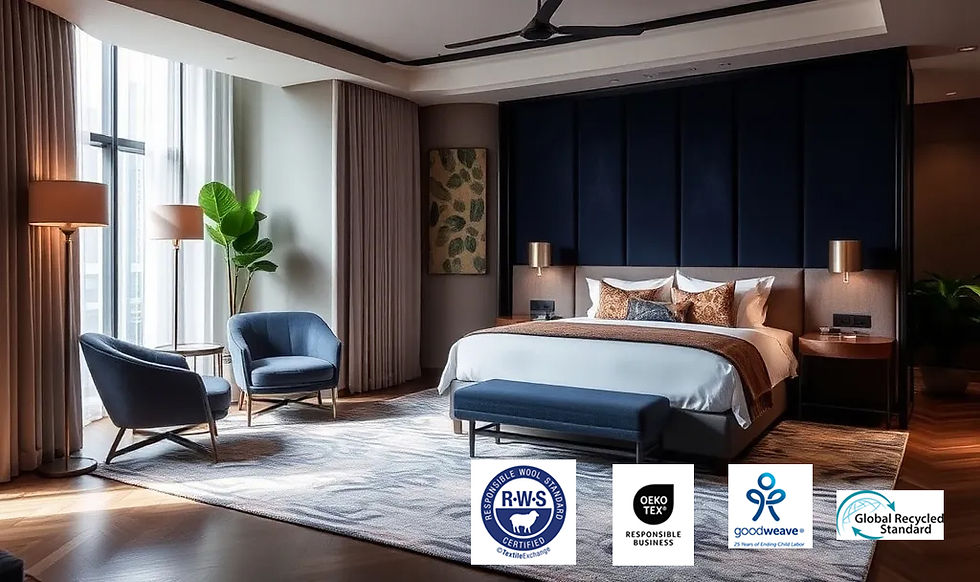
Modern clients increasingly expect sustainability and transparency alongside aesthetics. Working with an OEKO-TEX rug manufacturer helps designers meet these expectations by ensuring materials are tested for harmful substances and suitable for wellness-focused environments.
This is particularly relevant for family homes, workplaces, and hospitality projects where safety, indoor air quality, and responsible sourcing influence purchasing decisions as much as design appeal.
Adapting to Modern Aesthetics
Custom rug programs are especially valuable for contemporary rugs, where subtle variations in tone, texture, and geometry define the design language. Minimalist interiors benefit from precise color matching and controlled detailing, while bold modern spaces can experiment with abstract forms or layered textures—without being constrained by standard sizes or patterns.
This adaptability allows designers to push creative boundaries while maintaining functional excellence.
A Strategic Advantage for Design Professionals
Beyond aesthetics, made-to-order rugs offer logistical advantages. Designers can align production timelines with project schedules, request samples for client approval, and make adjustments before final execution. This reduces compromises, last-minute substitutions, and design dilution.
For architects and designers seeking to deliver distinctive spaces with long-term value, bespoke rugs are not an indulgence—they are a strategic design investment.
Conclusion: Designing from the Ground Up
Made-to-order rugs empower designers and architects to work with intention, precision, and authenticity. By combining craftsmanship, material flexibility, ethical production, and design control, custom flooring solutions elevate interiors from functional to exceptional.
In a world where originality defines success, bespoke rugs provide the freedom to design without limits—starting from the ground up.


Comments