


10 Questions to Ask Before Placing Your First Rug Export Order

The anticipation of placing your first international rug order is exciting. But excitement can quickly turn to frustration when shipments arrive late, colours don't match, or quality falls short of expectations. The difference between a smooth first experience and a costly lesson often comes down to one thing: asking the right questions before you commit.
Here are ten essential questions every buyer should ask an export rug manufacturer before placing that first order.

1. What Is Your Minimum Order Quantity (MOQ), and Do You Offer Flexibility for New Partnerships?
Minimum order quantities can be a major hurdle, especially for first-time buyers testing a new supplier. Many manufacturers set MOQs between 50 and 100 pieces per design, though some accept smaller orders for first-time partnerships.
A flexible manufacturer who understands the value of building long-term relationships will often accommodate smaller trial orders. This allows you to assess quality, communication, and reliability before committing to a container-sized shipment.
2. What Is the Knot Density (KPSI), and What Yarn Do You Use?
Knot density—measured in knots per square inch (KPSI)—is the single most reliable indicator of a rug's quality and durability. Premium handmade rugs typically range from 150 to over 400 KPSI. Higher density means finer detail, longer production time, and greater longevity.
Ask whether the yarn is hand-spun or machine-spun. Hand-spun wool, while more expensive, produces rugs with superior texture and character. Also clarify whether natural or synthetic dyes are used—natural dyes age gracefully and are preferred for heirloom-quality pieces.
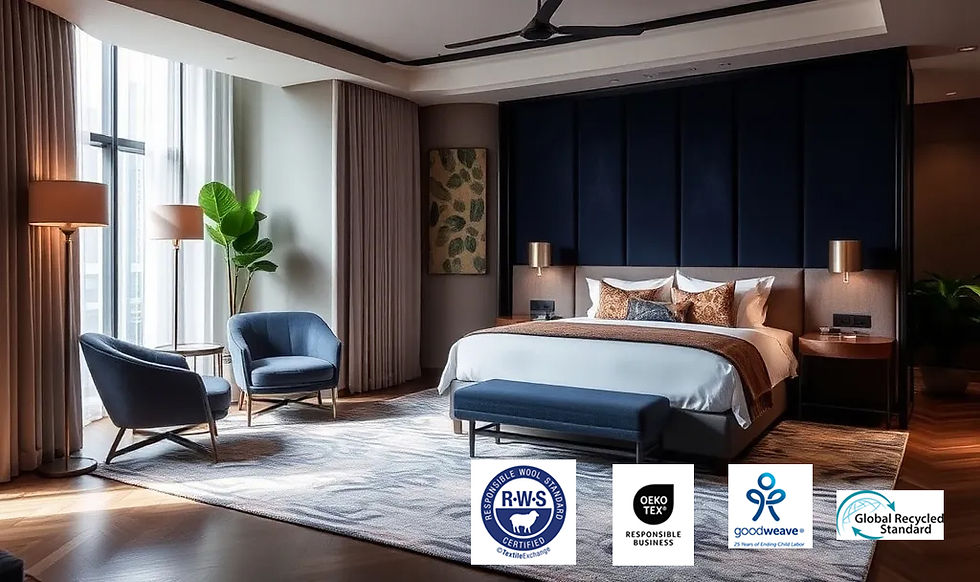
3. What Certifications Do You Hold—GoodWeave, OEKO‑TEX®, GRS, or RWS?
Certifications are not just badges; they are verifiable proof of ethical production, chemical safety, and environmental responsibility. For hand-knotted rugs destined for premium markets like the USA and Europe, certifications have become essential.
GoodWeave guarantees child-labour-free and forced-labour-free production. OEKO‑TEX® Standard 100 ensures rugs are tested for over 350 harmful substances, making them safe for homes, hotels, and commercial spaces. GRS verifies recycled content, while RWS certifies ethical wool sourcing.
A manufacturer who holds these certifications will proudly share documentation. If they hesitate or offer vague assurances, consider it a red flag.
4. What Is Your Sampling Process, and How Long Does It Take?
Never place a bulk order without seeing a physical sample. A pre-production sample—often called a strike-off—allows you to evaluate colour accuracy, texture, pile density, and finishing before full production begins.
Standard samples typically ship in 7–14 days, while custom-designed rugs require 15–25 days depending on complexity. A transparent manufacturer will provide a clear sampling timeline and offer digital proofs before committing to physical samples.
5. What Is Your Production Lead Time, and How Do You Handle Delays?
Hand-tufted rugs typically require 30–45 days for production, while hand-knotted pieces can take 8–16 weeks or longer. Custom designs and first-time orders often require additional time for sampling and approvals.
A professional exporter will provide a realistic production schedule and communicate proactively if delays arise. Ask about their contingency plans for material shortages, labour issues, or shipping disruptions.
6. What Is Included in Your Final Price, and What Are the Hidden Costs?
The quoted price per rug is rarely the final cost. Ask for a complete breakdown covering materials, labour, packaging, freight, insurance, customs duties, and any port fees.
Clarify shipping terms—are you working with FOB (Free on Board), CIF (Cost, Insurance, Freight), or EXW (Ex Works)? Each term shifts responsibility and cost differently. A transparent manufacturer will explain these terms clearly and provide a written quotation with all potential charges itemised.
7. What Quality Control Systems Do You Have in Place?
Quality control in rug manufacturing should happen at multiple stages—not just at the end. Ask about their inspection process: material inspection before weaving, in-process checks during production, and final inspection before packaging.
Many reputable exporters conduct a three-tier quality audit covering physical quality, aesthetic appeal, and packaging standards. Some also partner with third-party inspection agencies like SGS or Bureau Veritas for independent verification.
8. Can You Handle Custom Sizes, Colours, and Designs?
If your project demands exclusivity—custom dimensions, specific Pantone colours, or proprietary patterns—confirm the manufacturer's customization capabilities.
Ask about their design process: Can they work from your sketches or CAD files? Do they offer digital renderings before weaving? What is the additional lead time for custom work? A manufacturer who specialises in custom rugs will have a structured process for translating your vision into a woven reality.
9. What Packaging Standards Do You Follow for Export Shipments?
Bulk shipments require durable, export-grade packaging to prevent damage during ocean or air transit. Ask about their packaging methods: Are rugs rolled (not folded) around cardboard cores? Are they wrapped in polyethylene to protect against moisture? Do they use corner protectors and strapping for container loading?
Proper packaging is not a luxury—it is essential for ensuring your investment arrives in pristine condition.
10. What Logistics Support Do You Provide for Shipping and Customs?
An experienced Indian rugs exporter should offer more than just production—they should guide you through the complexities of international shipping. Ask about their freight options, shipping documentation (commercial invoice, packing list, bill of lading, certificate of origin), and customs clearance support.
A professional partner will also provide tracking information and keep you informed at every stage, from container loading to port arrival.
The Bottom Line
Placing your first rug export order is a significant step. Asking these ten questions will help you separate reliable partners from those who may promise more than they can deliver. A reputable manufacturer will welcome these inquiries, seeing them as the foundation for a trusted, long-term collaboration.
Take the time to get the answers you need. Your future shipments—and your reputation—depend on it.


This is a helpful guide for businesses preparing their first rug export order. Convert PDF into editable presentations can also help organize product details, supplier information, and export plans for easier communication.