


How Indian Rug Manufacturers Are Leading the Global Shift to Eco-Friendly Materials

Updated: Jul 23
The global rug industry is undergoing a quiet but powerful transformation. Where once aesthetics and price dominated buying decisions, sustainability has now taken center stage. From material sourcing to production processes, every step is being re-evaluated through an environmental lens. At the forefront of this shift are Indian carpet manufacturers, who are combining centuries-old craftsmanship with modern sustainability practices to redefine how rugs are made and valued worldwide.

A New Era of Conscious Production
Today’s buyers—whether homeowners, designers, or commercial developers—are demanding transparency and responsibility. This has accelerated the growth of Eco-friendly rugs, which prioritize low-impact materials, safer dyes, and ethical production methods.
Indian rug manufacturers are uniquely positioned to meet this demand. With a long tradition of working with natural fibers and manual techniques, they have adapted quickly to global sustainability expectations without losing the essence of craftsmanship.
Rethinking Raw Materials
One of the most significant changes in the industry is the shift toward sustainable raw materials. Instead of relying solely on newly sourced fibers, manufacturers are increasingly incorporating reclaimed wool into their production. This approach reduces waste, conserves resources, and minimizes the environmental footprint of each rug.
At the same time, the rise of recycled wool rugs demonstrates how innovation can coexist with tradition. By reprocessing existing wool into new yarns, manufacturers create durable and visually appealing products while supporting circular production models.
Certification as a Standard, Not an Option
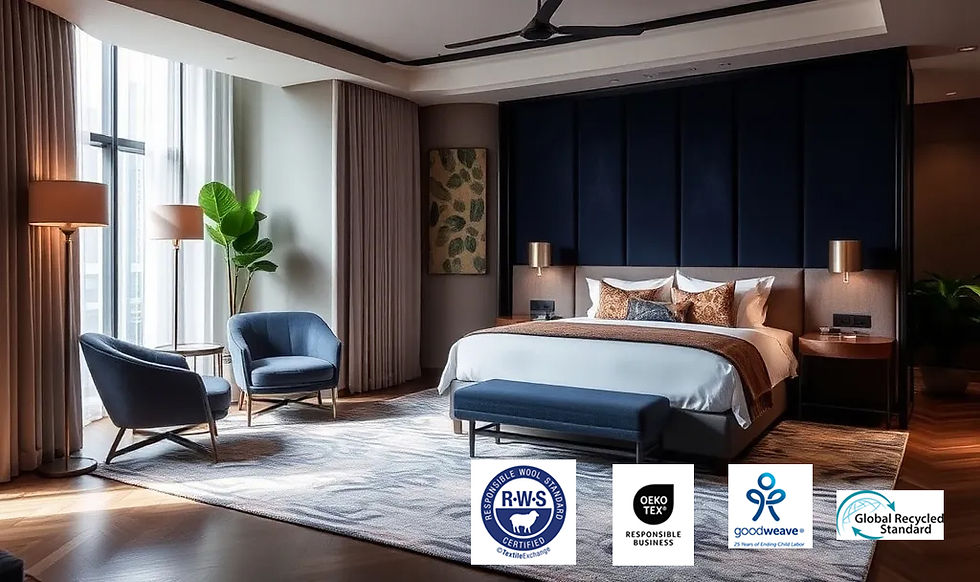
Sustainability claims must be backed by credible verification. Certifications such as the Global Recycled standard GRS and the Responsible wool standard RWS are becoming essential tools for ensuring accountability.
GRS confirms the use of recycled materials and responsible manufacturing practices, while RWS focuses on ethical wool sourcing, including animal welfare and land management. Indian manufacturers are increasingly aligning their processes with these certifications, allowing them to compete in global markets that demand transparency and compliance.
Alongside material innovation and recycling initiatives, certifications like OEKO-TEX® and Good Weave certification play a crucial role in reinforcing sustainability and ethical production. OEKO-TEX® certification ensures that every component of a rug—from yarn to dyes—is tested for harmful substances, making it safe for human use and environmentally responsible. Good Weave, on the other hand, focuses on social impact by guaranteeing that no child labor is involved in the production process while also supporting education and welfare programs for artisan communities. Together, these certifications strengthen buyer confidence and position Indian manufacturers as leaders not only in eco-friendly materials but also in transparent and ethical rug manufacturing practices.
The Strength of Natural Fibers
Beyond recycled materials, there is a growing emphasis on renewable, biodegradable fibers. Natural fiber rugs have become a cornerstone of sustainable design, offering durability without environmental compromise.
Materials like Jute rugs are widely appreciated for their affordability and organic texture, making them ideal for both residential and commercial spaces. Meanwhile, Abaca rugs bring a refined, slightly glossy finish along with exceptional strength, making them suitable for high-traffic areas.
These fibers not only reduce reliance on synthetic materials but also enhance the tactile and visual appeal of interiors.
Ethical Manufacturing at the Core
Sustainability is not just about materials—it is also about people. An Ethical rug manufacturer from India ensures fair wages, safe working conditions, and the absence of exploitative practices. Many manufacturers collaborate with artisan communities, providing stable employment and preserving traditional skills.
This human-centered approach strengthens the social dimension of sustainability, ensuring that environmental progress does not come at the cost of livelihoods.
Reviving and Restoring Value
Another important trend is the growing interest in extending the life cycle of rugs. Instead of discarding worn pieces, manufacturers are offering services that bring them back to life. Restored rugs involve repairing, cleaning, and sometimes redesigning older pieces, giving them renewed relevance.
This practice reduces waste while preserving craftsmanship, aligning perfectly with the principles of sustainability and circular design.
Custom rugs are another option where tailor made rugs are supplied to rug buyers as per their requirements.
Innovation Meets Tradition
Indian rug manufacturers are not abandoning tradition—they are enhancing it. By integrating modern sustainability practices into age-old weaving techniques, they are creating products that meet contemporary expectations without losing authenticity.
The result is a new category of Sustainable rugs and carpets that combine environmental responsibility with timeless design. These rugs appeal to a global audience that values both aesthetics and ethics.
Global Demand Driving Local Change
International markets, particularly in Europe and North America, are pushing for stricter environmental standards. This demand is driving Indian manufacturers to innovate continuously, adopting cleaner production methods, reducing water usage, and minimizing chemical inputs.
As a result, sustainability is no longer a niche offering—it is becoming the industry norm.
Benefits for Buyers
For buyers, choosing eco-friendly rugs offers multiple advantages:
Reduced environmental impact
Safer indoor air quality due to low chemical use
Long-lasting durability from high-quality natural materials
Alignment with global sustainability goals
These benefits make sustainable rugs an attractive option for both residential and commercial projects.
Challenges and the Road Ahead
While progress is significant, challenges remain. Certification processes can be complex, and sourcing consistent sustainable materials requires careful planning. However, Indian manufacturers continue to invest in research, training, and infrastructure to overcome these barriers.
The future will likely see even greater integration of recycled materials, advanced traceability systems, and innovative eco-friendly fibers.
Final Thoughts
Indian rug manufacturers are playing a pivotal role in shaping the future of the global rug industry. By embracing eco-friendly materials, ethical practices, and certified standards, they are setting new benchmarks for sustainability.
This transformation is not just about meeting market demand—it is about redefining value. A rug is no longer judged solely by its design or price, but by the story it tells: one of responsibility, craftsmanship, and care for the planet.
As the world moves toward more conscious consumption, India’s leadership in sustainable rug manufacturing is not just relevant—it is essential.
1. What makes a rug eco-friendly?
Eco-friendly rugs are made using sustainable materials, non-toxic dyes, and responsible production methods that minimize environmental impact while ensuring safety for users.
2. Are recycled wool rugs as durable as new wool rugs?
Yes, recycled wool rugs can be highly durable when processed correctly. They retain many of the natural strengths of wool while reducing waste and resource consumption.
3. What is the difference between GRS and RWS certifications?
GRS (Global Recycled Standard) verifies the use of recycled materials and responsible production, while RWS (Responsible Wool Standard) ensures wool is sourced ethically with animal welfare and land management practices.
4. Why are natural fiber rugs gaining popularity?
Natural fiber rugs are biodegradable, renewable, and free from synthetic chemicals, making them a preferred choice for environmentally conscious buyers.
5. How do OEKO-TEX® and GoodWeave certifications benefit buyers?
OEKO-TEX® ensures rugs are free from harmful substances, while GoodWeave guarantees ethical production without child labor, giving buyers confidence in both safety and social responsibility.
Working with a certified carpet manufacturer in India ensures quality, ethics, and reliable delivery for every project.


Comments