


Why Transparency in Rug and Carpet manufacturing Is Becoming a Competitive Advantage

In an era of conscious consumerism and heightened regulatory scrutiny, opacity is no longer an option for businesses hoping to compete on a global scale. For rug and carpet manufacturers from India, the shift towards complete visibility is not just an ethical imperative but a powerful commercial differentiator. Brands that embrace transparency are discovering that it unlocks pricing power, builds unshakeable buyer trust, and establishes a resilient market position that competitors cannot easily replicate.

What Does Transparency Mean in Rug Manufacturing?
Transparency in this context extends far beyond a simple marketing claim. It represents a fundamental commitment to openness that covers every stage of a product's journey, from the origin of the raw wool, jute, or abaca to the finished creation. It means being able to identify every artisan who contributed to a hand-knotted masterpiece, understanding the working conditions in the workshops, and knowing the environmental impact of the dyes and processes used. For a bulk rug supplier, this involves a complete breakdown of the supply chain, ensuring that every entity involved adheres to the highest standards of social and environmental responsibility. This level of detail provides buyers with the confidence that they are investing in products made with integrity.
Handmade Rugs: Understanding the Construction Methods
Transparency becomes particularly meaningful when buyers understand the craftsmanship behind their floor coverings. The term "handmade" encompasses several distinct construction methods, each with its own production process, durability profile, and cost structure.
Hand-knotted rugs represent the pinnacle of textile craftsmanship. Each knot is tied individually by skilled artisans working from a design map, creating a structurally integrated piece where the pile is mechanically locked into a woven foundation of warp and weft threads. This construction allows for extraordinary detail and refinement, with premium pieces from Bhadohi achieving up to 300 knots per square inch. The labour-intensive process typically requires five to twelve months for completion, depending on size and knot density. Hand-knotted rugs are prized for their exceptional durability—often lasting thirty years or more—and their ability to become heirloom possessions passed across generations. The transparency of their construction is visible in the mirror-image design that appears on both sides, with individual knots visible on the reverse.
Hand-tufted rugs offer an alternative path to handmade beauty with a distinctly different production logic. The process starts with stretched canvas on a sturdy frame, through which artisans punch strands of yarn using a tufting tool or powered gun, following a pre-drawn design. Unlike the structural integration of knotted constructions, tufted pieces rely on a secondary fabric backing applied after tufting to secure the yarns in place—without this backing, the yarns would pull loose. This technique allows for sharper curves, layered tones, and irregular motifs that might challenge hand-knotted production. Hand-tufted creations typically require four to six months for completion, making them more accessible for projects with tighter timelines. While their lifespan of five to ten years is shorter than their knotted counterparts, they offer exceptional design flexibility at a more accessible price point.
For manufacturers committed to transparency, documenting which construction method was used—along with the specific materials, knot density, and finishing processes—provides buyers with the information they need to make informed decisions aligned with their durability requirements, budget parameters, and aesthetic aspirations.
The Certification Backbone of Verified Transparency
Achieving genuine transparency requires verification through rigorous, independent, third-party standards. These certifications act as a universally understood language of trust, allowing a trusted carpet supplier to prove their claims without ambiguity. By 2026, these credentials are no longer optional checkboxes for a certified rug manufacturer but are baseline requirements for commercial buyers across hospitality, corporate offices, and retail chains.
Several key certifications form the backbone of this transparent ecosystem:
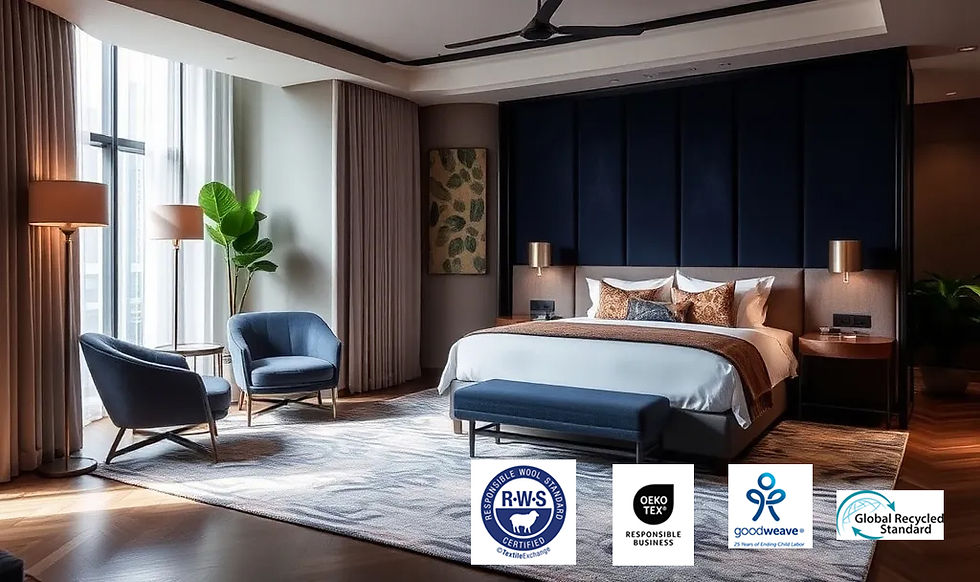
GoodWeave Certified Rugs: Perhaps the most powerful symbol of social responsibility, GoodWeave certification provides the best assurance that products are made free from child, forced, and bonded labor. It offers a level of integrity and accountability that other pledges cannot match. For a GoodWeave certified rug manufacturer, this certification is a profound statement of ethical commitment that directly addresses the legacy of labour concerns in the industry.
OEKO-TEX Certified Rugs: This standard assures that textiles are free from harmful substances and safe for human use. For a rug destined for a home or a hotel room, OEKO-TEX certified rugs provide essential peace of mind. Achieving this certification is a rigorous but rewarding process for Indian producers, significantly strengthening their credibility in international markets.
GRS & RWS Certified: The Global Recycled Standard (GRS) validates recycled content, while the Responsible Wool Standard (RWS) confirms ethical wool sourcing and animal welfare. Together, these certifications verify a manufacturer's commitment to sustainable materials, which is crucial as brands deploying transparent supply-chain disclosures enjoy pricing power among discerning buyers.
ISO & SMETA: Certifications like ISO 9001 (Quality Management) and ISO 14001 (Environmental Management), along with Sedex SMETA (Social and Ethical Audits), provide a comprehensive framework for operational excellence and ethical business practices. Manufacturers holding these credentials, such as those in Bhadohi, demonstrate a holistic approach to quality, social responsibility, and environmental stewardship.

How Transparency Becomes a Competitive Advantage
The benefits of this comprehensive transparency are tangible and impactful, creating a durable competitive advantage in several ways.
Pricing Power and Premium Positioning: A trusted carpet supplier that can prove its ethical and sustainable credentials can command premium pricing. In a market flooded with cheaper, opaque alternatives, transparency acts as a powerful differentiator. Buyers, particularly younger generations and institutional clients, are willing to pay more for verified quality, safety, and ethics. A brand that can show the hands that made its rugs and the journey of its materials justifies a higher price point and builds brand loyalty.
Unlocking New Markets and Partnerships: Transparency is increasingly a prerequisite for doing business with major retailers, hospitality groups, and government bodies. For example, projects focused on corporate due diligence for Dutch companies aim to strengthen the supply chain to combat child labour. A transparent manufacturer, with all its certifications in order, becomes the preferred partner for these large, high-value contracts.
Mitigating Risk and Building Resilience: A transparent rug supply chain is a resilient one. By knowing every step of the process, manufacturers can better manage risks, from supply chain disruptions to reputational damage. This is why leading companies are investing in technologies for real-time ESG visibility and end-to-end supply chain transparency. This proactive approach is increasingly valued by buyers who see their suppliers as strategic partners.
The Next Frontier: Digital Product Passports: The industry is already moving beyond traditional certifications to embrace the Digital Product Passport (DPP). This innovation provides detailed information about a rug's origin, materials, environmental footprint, and care instructions. By making this information easily accessible, often via a QR code, manufacturers are taking transparency to the next level, empowering consumers and buyers with unprecedented knowledge and solidifying their reputation as industry leaders.
For the rug and carpet manufacturers from India, particularly those in clusters like Bhadohi who are already embracing certifications like OEKO-TEX, GoodWeave, and GRS, the path is clear. Those who continue to invest in and communicate their transparency are not just selling floor coverings; they are selling integrity, safety, and a story of positive impact. This is the competitive advantage that defines the future of the industry.
Working with a certified carpet manufacturer in India ensures quality, ethics, and reliable delivery for every project.


Comments