


Specifying Carpets for Hospitals and Clinics: Why OEKO-TEX® and Low-VOC Matter More Than Pattern

When architects and procurement teams select flooring for healthcare spaces, visual appeal often receives too much attention. Patterns, textures, and color palettes certainly contribute to interior design, but in hospitals and clinics, performance and safety must take priority over aesthetics. Flooring choices directly influence indoor air quality, patient comfort, maintenance efficiency, and long-term operational health standards.
Healthcare environments demand materials that support healing rather than introduce unnecessary environmental risks. Patients recovering from illness, individuals with respiratory sensitivities, newborns, and elderly residents are particularly vulnerable to airborne contaminants and chemical exposure. Because of this, the conversation around healthcare flooring has shifted dramatically in recent years.
Today, certifications and emission standards matter far more than decorative styling alone.

Why Indoor Air Quality Matters in Healthcare Spaces
Unlike commercial offices or retail environments, medical facilities operate continuously. Patients, healthcare professionals, and visitors spend extended periods indoors, often in enclosed climate-controlled spaces. Poor indoor air quality can contribute to discomfort, headaches, respiratory irritation, allergic reactions, and long-term health concerns.
One major contributor to indoor contamination is volatile organic compounds, commonly known as VOCs. These chemicals may be released from adhesives, synthetic backings, dyes, finishes, or manufacturing treatments used in flooring products.
Although VOC emissions can originate from many building materials, carpets play a significant role because they cover large surface areas and remain in direct contact with indoor air circulation systems.
Low-emission flooring helps reduce airborne pollutants and creates safer interior conditions for both patients and staff. This is especially important in spaces such as:
Intensive care units
Pediatric departments
Rehabilitation centers
Waiting rooms
Diagnostic clinics
Senior care facilities
In healthcare design, flooring should actively support wellness objectives rather than simply complement architectural themes.
The Importance of Third-Party Certifications
Marketing language alone is not enough when specifying materials for healthcare projects. Terms such as “safe,” “green,” or “eco-friendly” may sound reassuring, but without independent testing, they offer little assurance regarding chemical safety or environmental compliance.
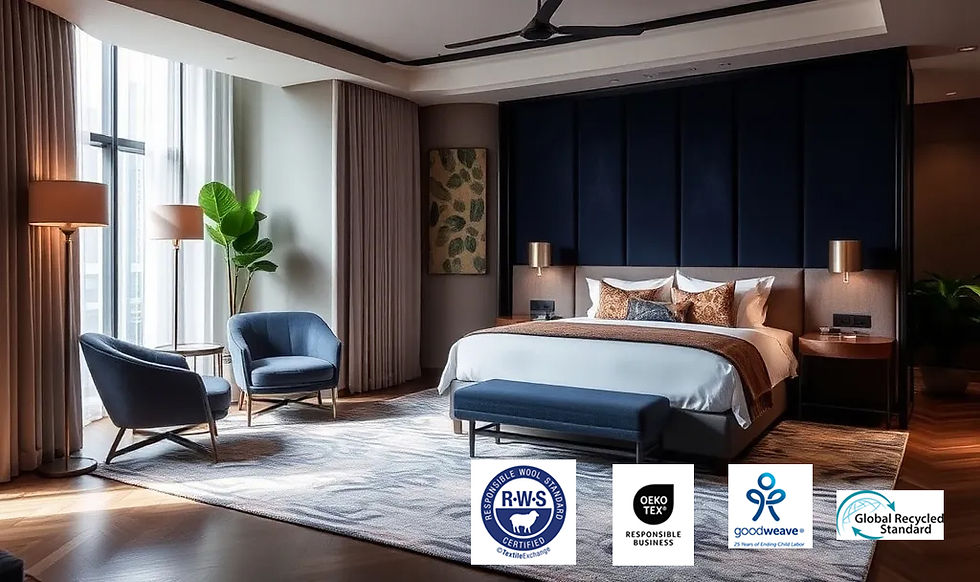
This is where OEKO-TEX® certified rugs become highly valuable. The certification verifies that textile products have been tested for harmful substances and meet internationally recognized human ecological safety standards.
Testing includes evaluation for:
Heavy metals
Formaldehyde
Harmful dyes
Pesticide residues
Restricted chemicals
Skin-irritating substances
For healthcare environments, this level of verification provides greater confidence that flooring materials contribute to healthier interiors.
Certification also demonstrates supply chain accountability. Hospitals and large procurement teams increasingly require documented compliance rather than verbal sustainability claims. Third-party testing helps reduce procurement risk and simplifies approval processes for institutional projects.
When evaluating flooring vendors, buyers should request:
Current certification validity
Testing documentation
Product scope coverage
VOC emission reports
Manufacturing compliance details
Reliable carpet and rug suppliers understand these requests are part of responsible specification practices.
Why Low-VOC Flooring Has Become a Priority
Modern healthcare design increasingly prioritizes evidence-based environments that promote patient recovery and staff well-being. Air quality plays a measurable role in these outcomes.
Strong chemical odors from newly installed flooring can negatively affect sensitive patients and create operational concerns during renovations or phased installations. Low-VOC products help minimize these disruptions and allow facilities to maintain cleaner indoor conditions after installation.
Healthcare administrators are also becoming more aware of how building materials impact sustainability goals, employee retention, and long-term maintenance expenses.
Flooring with reduced emissions can support:
Better occupant comfort
Improved environmental compliance
Safer renovation procedures
Reduced odor complaints
Cleaner indoor environments
In many projects, procurement professionals now prioritize certified low-emission materials before considering decorative appearance.
This does not mean design becomes irrelevant. Rather, aesthetics should complement performance standards rather than replace them.
Durability Still Matters in Medical Facilities
Healthcare flooring experiences constant foot traffic, rolling equipment movement, frequent cleaning, and demanding sanitation procedures. Products selected for these environments must withstand rigorous daily use without compromising safety performance.
Healthcare carpets and rugs designed for institutional spaces should offer:
Dense construction for durability
Stable backing systems
Ease of maintenance
Resistance to wear patterns
Consistent color retention
Comfort underfoot for staff
Medical environments also benefit from flooring solutions that reduce noise transmission. Softer surfaces can help create quieter spaces, improving patient comfort and reducing stress in recovery zones.
In larger facilities, Large area rugs may be used in reception spaces, administrative offices, consultation rooms, and hospitality-inspired waiting areas. However, these products still need to meet healthcare-grade performance expectations rather than purely decorative standards.
The Growing Demand for Certified Manufacturing
As healthcare construction expands globally, procurement teams are placing greater emphasis on transparent sourcing and verified production standards.
Working with a Certified rug manufacturer provides buyers with stronger confidence regarding testing procedures, quality consistency, and compliance documentation. This becomes particularly important for institutional projects involving strict tender requirements or international standards.
Many developers and procurement specialists now prefer working directly with a Bulk rug manufacturer capable of handling large-scale production while maintaining consistent environmental and quality benchmarks.
Similarly, partnering with a B2B rug manufacturer allows project managers to coordinate custom specifications, installation timelines, and technical compliance more effectively across multiple locations.
India has also emerged as a major sourcing destination for healthcare flooring solutions because of its strong textile manufacturing infrastructure and growing focus on certified production systems. A Wholesale rug manufacturer from India can often provide scalable customization, skilled craftsmanship, and compliance-focused manufacturing for international hospitality and healthcare markets.
However, buyers should still verify:
Certification authenticity
Production capacity
Testing protocols
Quality assurance systems
Material sourcing transparency
Responsible sourcing always requires documentation rather than assumptions.
Why Pattern Should Never Be the Main Decision Factor
Design trends evolve constantly. A carpet pattern that appears contemporary today may feel outdated within a few years. Health and safety standards, however, remain critical throughout the entire lifecycle of a healthcare facility.
Choosing flooring based primarily on appearance can create long-term operational risks if emission levels, maintenance requirements, or material safety standards are overlooked.
In healthcare settings, flooring decisions should first prioritize:
Indoor air quality
Chemical safety
Durability
Ease of maintenance
Compliance documentation
Patient comfort
Only after these requirements are met should decorative considerations guide final selections.
The most successful healthcare interiors balance aesthetics with measurable performance standards.
Final Thoughts
Hospitals and clinics require flooring solutions that support health, safety, and long-term operational reliability. While visual design remains important, certifications and low-emission performance now play a far greater role in responsible healthcare specification.
By prioritizing independently tested materials and transparent manufacturing practices, procurement teams can create safer environments for patients, staff, and visitors alike.
In modern healthcare design, the best flooring choices are not simply the most attractive. They are the ones proven to contribute to healthier spaces.
#HealthcareCarpets #HospitalFlooring #OekoTexCertified #LowVOC #HealthcareDesign #HospitalGradeRugs #CertifiedRugManufacturer #BulkRugManufacturer #B2BRugManufacturer #WholesaleRugs #IndianRugManufacturer #HealthcareInteriors #CommercialFlooring #SustainableInteriors #IndoorAirQuality #MedicalFacilityDesign #LargeAreaRugs #ClinicInteriors #EcoFriendlyFlooring #CustomRugs #HospitalityGradeRugs #HealthcareArchitecture #InteriorDesign #TextileSafety #CommercialRugs #FlooringSolutions #EthicalManufacturing #HealthcareConstruction #VOCFreeLiving #SafeInteriors


Comments