


Why Transparency Matters in the Handmade Rug Supply Chain

The global home décor industry has changed significantly over the past decade. Consumers, retailers, designers, and commercial buyers are no longer satisfied with simply knowing what a product looks like. Increasingly, they want to understand where it comes from, how it is made, and who is involved in creating it.
This shift has made transparency one of the most important factors in modern sourcing decisions. From raw material procurement to artisan welfare and environmental responsibility, buyers now expect greater visibility into every stage of production.
For the handmade flooring sector, transparency is more than a business trend—it is a foundation for trust. Companies that openly communicate their processes are better positioned to build long-term relationships with customers and partners alike.
As global demand for artisan craftsmanship continues to grow, transparency is becoming a defining characteristic of successful rug businesses.

The Modern Consumer Wants More Information
Today's buyers have access to more information than ever before. Before making purchasing decisions, many consumers research products, compare suppliers, and investigate brand values.
Questions commonly asked include:
Where was the product made?
What materials were used?
Were artisans treated fairly?
Are environmental standards being followed?
Is the supply chain traceable?
These questions reflect a broader shift toward conscious consumption. Buyers want confidence that their purchases align with their values.
For a Handmade rugs manufacturer from India, providing clear answers to these questions can significantly strengthen customer trust and brand credibility.
Transparency Builds Buyer Confidence
Trust is one of the most valuable assets any business can develop.
When buyers understand how products are sourced and manufactured, they are more likely to feel confident about their purchasing decisions. Transparency reduces uncertainty and creates reassurance that products meet expected standards.
This is especially important for international sourcing relationships where buyers may never visit a production facility in person.
Companies that openly share information about:
Materials
Production methods
Quality control
Certifications
Artisan involvement
often experience stronger customer loyalty and higher repeat business.
In a competitive marketplace, transparency becomes a powerful differentiator.
Ethical Production Matters More Than Ever
Modern consumers increasingly expect brands to demonstrate social responsibility.
This expectation has elevated the importance of Ethical rug production throughout the industry. Buyers want assurance that products are created under fair working conditions and that artisans receive appropriate compensation for their skills.
Transparency allows manufacturers to communicate:
Fair labor practices
Safe working environments
Community support initiatives
Responsible sourcing policies
By openly sharing these practices, companies can demonstrate that their commitment to ethics extends beyond marketing claims.
Consumers are more likely to support brands that align with their personal values and contribute positively to artisan communities.
Material Traceability Supports Sustainability
Sustainability has become a major factor influencing purchasing decisions across residential, hospitality, and commercial markets.
Buyers increasingly seek products made from renewable and responsibly sourced materials.
This has driven demand for:
Natural fiber rugs
Environmentally responsible manufacturing
Low-impact production processes
Traceable raw materials
Transparency enables manufacturers to explain where fibers originate and how they are processed.
Products such as Jute rugs, Abaca rugs, and Sisal rugs are often favored by environmentally conscious consumers because they are derived from renewable plant sources and align with sustainable interior design trends.
Providing clear sourcing information helps buyers make informed choices.
Craftsmanship Deserves Recognition
Handcrafted products carry a unique story that mass-produced goods cannot replicate.
Each rug reflects the expertise, patience, and creativity of skilled artisans. Transparency allows businesses to highlight the craftsmanship behind every piece and celebrate the people responsible for creating it.
This storytelling becomes particularly valuable when marketing:
Hand-knotted rugs
Hand-tufted rugs
Heritage-inspired collections
Limited-edition designs
Consumers increasingly appreciate products that feel authentic and human rather than anonymous and factory-produced.
Sharing artisan stories helps create emotional connections that strengthen brand loyalty.
Transparency Improves Quality Assurance
Quality is one of the most important considerations for buyers investing in handcrafted flooring.
Transparent manufacturers often provide detailed information regarding:
Material specifications
Construction methods
Quality-control procedures
Inspection standards
Finishing techniques
This visibility helps buyers understand what they are purchasing and why products perform as expected.
For international retailers and commercial clients sourcing Export quality rugs, clear quality documentation can be especially valuable.
Transparency reduces misunderstandings and helps ensure that products consistently meet expectations.
Online Shopping Increases the Need for Transparency
The growth of digital commerce has transformed how consumers purchase home furnishings.
When buying Online rugs, customers cannot physically inspect texture, construction quality, or material composition before making a purchase.
As a result, transparency becomes essential.
Detailed product descriptions, production information, sourcing details, and educational content help bridge the gap between digital browsing and purchasing confidence.
Brands that openly communicate their manufacturing processes often experience higher conversion rates because customers feel better informed and more secure in their decisions.
Global Buyers Value Authenticity
International buyers increasingly seek products that reflect genuine craftsmanship and cultural heritage.
This has fueled demand for:
Indian rugs
Moroccon rugs
Traditional weaving styles
Artisan-made home décor
However, authenticity must be supported by transparency.
Consumers want confidence that products marketed as handcrafted or culturally inspired are genuinely connected to those traditions.
Manufacturers who share detailed information about weaving techniques, artisan communities, and production methods are better positioned to establish authenticity and trust.
Transparency Supports Long-Term Partnerships
The benefits of transparency extend beyond individual sales.
For wholesalers, designers, hospitality groups, and retailers, transparent communication forms the basis of strong business relationships.
A dependable Bulk rug supplier openly shares:
Production capabilities
Lead times
Material sourcing information
Quality standards
Pricing structures
This openness helps reduce risk and improves collaboration.
Long-term partnerships are often built on trust, and trust grows when businesses communicate honestly and consistently.

Premium Materials Require Clear Communication
Luxury flooring products often involve specialized materials that influence appearance, durability, and maintenance requirements.
Transparency helps buyers understand the characteristics of premium fibers such as:
Wool rugs
Silk rugs
Natural plant-based materials
Providing clear information regarding material benefits and care recommendations improves customer satisfaction while reducing potential misunderstandings after purchase.
Educated buyers are more likely to appreciate the value of high-quality craftsmanship and make informed purchasing decisions.
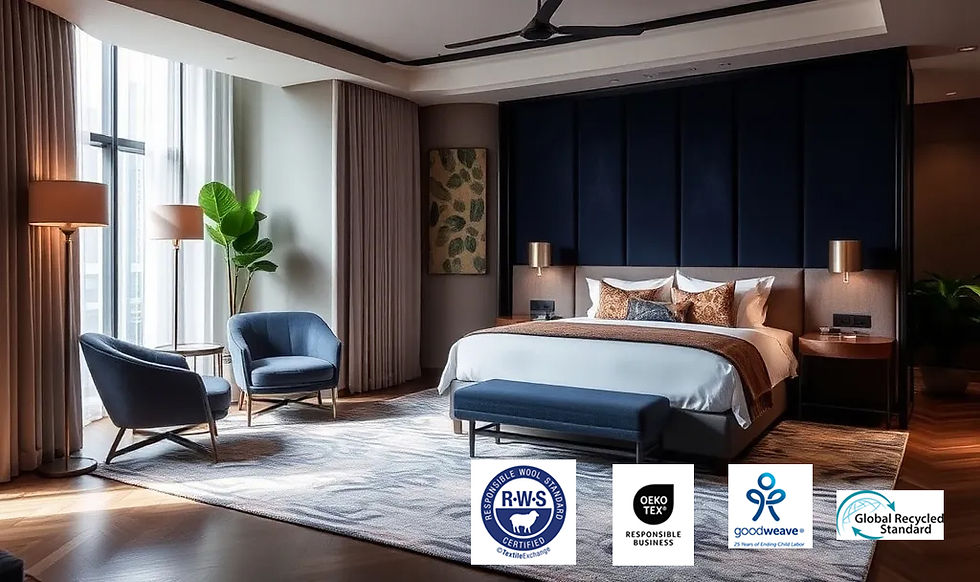
As global buyers place greater emphasis on sustainability, safety, and responsible sourcing, certifications have become an important indicator of a manufacturer's commitment to international standards. Leading producers in Bhadohi are increasingly investing in recognized certifications to meet the expectations of retailers, designers, hospitality groups, and commercial buyers worldwide. Working with an OEKO-TEX® certified rug manufacturer provides assurance that rugs are tested for harmful substances and produced according to stringent safety requirements. Similarly, GRS RWS certified rugs from Bhadohi support growing demand for environmentally responsible products by promoting recycled material transparency and responsibly sourced wool throughout the supply chain. These certifications not only strengthen buyer confidence but also demonstrate a commitment to ethical manufacturing, sustainability, and quality assurance—factors that are becoming essential in today's global rug and carpet market.
The Future of the Handmade Rug Industry
As consumer expectations continue evolving, transparency will become even more important throughout the handmade flooring sector.
Buyers increasingly want products that combine:
Quality craftsmanship
Ethical sourcing
Sustainability
Authenticity
Traceability
Carpet Manufacturers that embrace transparency are better positioned to meet these expectations while strengthening their reputation in global markets.
The future of handcrafted flooring will not be defined solely by design or price. It will be shaped by trust, accountability, and the willingness of companies to openly share the stories behind their products.
In a world where consumers care deeply about how things are made, transparency is no longer optional—it is a critical ingredient for lasting success.
Working with a certified carpet manufacturer in India ensures quality, ethics, and reliable delivery for every project.
1. Why is transparency important in the handmade rug supply chain?
Transparency helps buyers understand where rugs are made, how materials are sourced, and whether ethical and environmental standards are followed. It builds trust between manufacturers, retailers, designers, and end consumers while supporting informed purchasing decisions.
2. What should buyers ask a handmade rug manufacturer before placing an order?
Buyers should ask about raw material sourcing, production processes, quality control systems, certifications, lead times, customization capabilities, and labor practices. Transparent manufacturers are usually willing to provide detailed information and documentation.
How do certifications help verify responsible rug manufacturing?
Certifications such as OEKO-TEX®, GRS, RWS, and GoodWeave® provide independent verification of product safety, responsible sourcing, sustainability practices, and ethical labor standards. They help buyers assess supplier credibility and reduce sourcing risks.
4. Why are Bhadohi rug manufacturers trusted by international buyers?
Bhadohi is recognized as one of India's leading carpet manufacturing hubs, known for skilled artisans, centuries-old weaving traditions, export expertise, and the ability to produce high-quality handmade rugs for global residential, hospitality, and commercial markets.
5. How does transparency benefit online rug buyers?
When purchasing rugs online, customers cannot physically inspect products before buying. Transparent product descriptions, material details, manufacturing information, certifications, and quality standards help buyers make confident purchasing decisions and reduce uncertainty.


Comments