


Your Vision, Their Knots: A Step-by-Step Guide to Ordering a Custom Rug from Bhadohi

The ancient city of Bhadohi, nestled along the banks of the Ganges in Uttar Pradesh, has been the heartbeat of India's carpet weaving tradition for over four centuries. Since the Mughal era introduced Persian carpet-making techniques to the region, local artisans have transformed this craft into a globally celebrated art form. Today, Bhadohi's master weavers supply prestigious hotels, luxury residences, and discerning clients worldwide with extraordinary floor coverings that blend heritage techniques with contemporary design sensibilities.
Ordering a custom rug from this legendary carpet capital may seem daunting, but the process is remarkably straightforward when you partner with an experienced carpet manufacturer from Bhadohi. Here is your step-by-step guide to bringing your vision to life.

Step 1: Conceptualisation and Design Brief
Every bespoke journey begins with an idea. Whether you have a hand-drawn sketch, digital artwork, reference image, or simply a mood board capturing colours and textures, this is where your rug starts taking shape.
Professional rug makers collaborate closely with clients during this phase, advising on proportions, textures, and construction methods. Share reference images, architectural plans, or colour palettes. Designers translate these concepts into workable layouts, ensuring your vision aligns with technical feasibility.
This initial consultation typically takes anywhere from a few days to two weeks, depending on design complexity and how quickly approvals are finalised. Even small adjustments at this stage can significantly impact the final look and timeline, so thorough planning pays dividends.
Step 2: Material Selection
Once your design is approved, materials are finalised. Bhadohi manufacturers offer an extraordinary palette of premium fibres:
Wool remains the gold standard for durability and comfort. Sourced from regions like New Zealand and Rajasthan, prized varieties include Merino, mohair, Indian, Afghan, and Himalayan wool—each offering unique softness, warmth, and resilience.
Silk brings lustrous sheen and delicate touch, adding opulence to any space.
Jute provides organic texture and earthy charm, ideal for eco-conscious interiors.
Abaca, derived from banana tree leaves, offers a smooth, durable surface with natural lustre.
Sisal and cotton round out the natural fibre offerings, while viscose and recycled PET provide versatility for high-traffic areas.
Fibre choice influences not only look and feel but also production time. Custom dyeing adds additional days to ensure colour accuracy and consistency.
Step 3: Construction Method
Your design may be produced through one of three primary techniques:
Hand-knotted rugs represent the pinnacle of craftsmanship. Each knot is tied individually by skilled artisans, making this technique ideal for intricate designs and heirloom-quality pieces. This labour-intensive process can take anywhere from 8 weeks to 6 months depending on size and knot density.
Hand-tufted rugs use tufting guns to insert yarn into a backing canvas following the design outline. This method allows greater speed and flexibility, with typical timelines ranging from 3 to 6 weeks.
Flatweave Rugs, including dhurries and kilims, involve interlacing threads on looms, resulting in lightweight, reversible pieces ideal for modern interiors.
Custom pile height, density, and finishing can also be specified to match your requirements.
Step 4: Sampling and Approval
Before full production begins, reputable manufacturers create a small strike-off sample. This allows clients to review colours, texture, knot density, and pile height.
Sampling is especially valuable for large projects or export orders, as it minimises the risk of rework later. This stage usually adds one to three weeks, depending on technique and detail level. While it may seem like extra time, it often saves weeks by preventing changes during production.
Step 5: CAD Design and Technical Finalisation
Many manufacturers now create Computer-Aided Design (CAD) renderings of your rug, precisely aligning the design with your chosen size and colours. This digital step ensures every detail is perfect before a single knot is tied.
Once the CAD design receives final approval, production commences.
Step 6: Production and Weaving
The core of the timeline lies in the construction method. For hand-knotted creations, each knot is tied individually. A fine knot density of 150 knots per square inch yields only about one square foot per day per weaver. A 9×12 foot rug can require 3–4 months of dedicated labour. For museum-quality pieces, production may exceed six months.
Hand-tufted pieces move faster. A skilled team can produce a medium-sized rug in 3–4 weeks, with larger commercial orders typically taking 6–8 weeks including carving and finishing.
Step 7: Finishing and Quality Control
Once weaving or tufting is complete, the rug undergoes finishing. This includes trimming, washing, stretching, edge binding, and final inspection. Washing is particularly important for setting the pile and enhancing colour depth.
Skilled inspectors perform strict quality checks, examining dimensions, colour consistency, knot tension, and any flaws. Export quality pieces are tested for parameters like colourfastness and anti-static properties.
This stage usually takes one to two weeks but is crucial for achieving a polished final product.
Step 8: Certification and Compliance
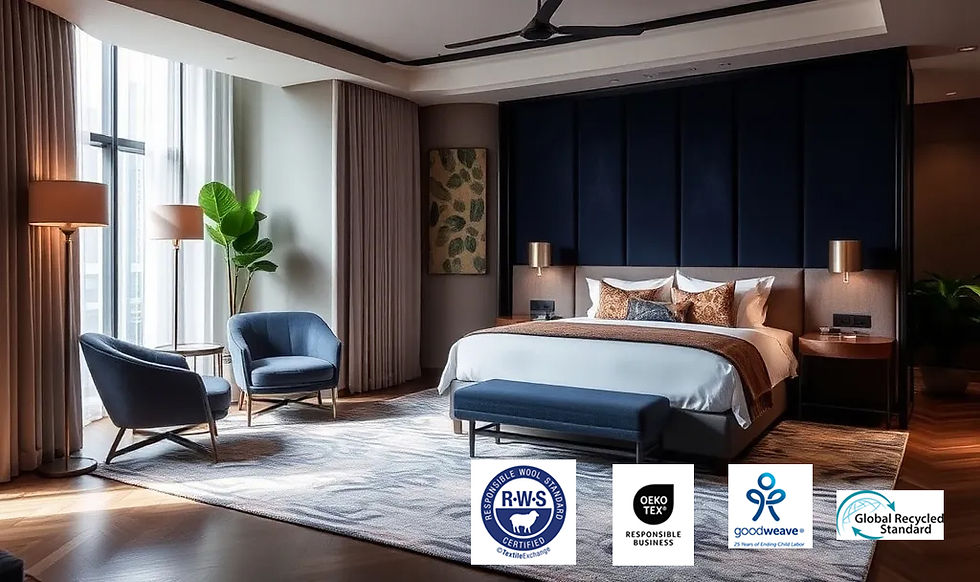
For buyers seeking verified quality, certification is non-negotiable. An OEKO-TEX® certified manufacturer ensures rugs are tested for harmful substances, restricted chemicals, and dyes that could affect human health. GRS (Global Recycled Standard) validates recycled content, while RWS (Responsible Wool Standard) confirms ethical wool sourcing including animal welfare and land management.
Many international buyers now require certification documentation before placing large orders. Choosing a manufacturer experienced with compliance simplifies the process significantly.
Step 9: Final Approval and Payment
When your rug is ready, manufacturers share detailed images and videos for final review. After your approval, the remaining balance becomes due, along with shipping costs based on your preferred choice of air or sea cargo.
Step 10: Shipping and Delivery
As soon as final payment is received, your custom rug is shipped, and tracking information is provided. A typical order of handmade pieces takes 60 to 120 days from order confirmation to delivery at a major port. This includes sampling, material procurement, production, sea freight (20–45 days), and customs clearance.
Why Bhadohi?
Bhadohi's ecosystem includes spinning units, dyeing facilities, washing plants, and finishing centres—all working together to maintain quality control from raw fibre to finished product. Manufacturers here combine generations of weaving expertise with capacity for both small-batch and large-scale production.
Whether you are designing for a luxury home, boutique hotel, or retail collection, Bhadohi's artisans transform your vision into a handcrafted masterpiece—one knot at a time.
Ready to begin your custom rug journey? Connect with certified manufacturers from Bhadohi and bring your unique vision to life.
Working with a certified carpet manufacturer in India ensures quality, ethics, and reliable delivery for every project.


Comments