


The Secret Weapon for B2B Rug Brands: India’s Manufacturing Ecosystem

For any B2B rug brand looking to scale, the supply chain can either be a powerful growth engine or a frustrating bottleneck. When it comes to floor coverings, few regions offer the combination of heritage, flexibility, and cost efficiency that India provides. Across the subcontinent, rug manufacturers from India are quietly enabling everything from boutique home decor labels to international retail chains.

A Legacy Built for Modern Commerce
India’s reputation as a rug-producing nation is not accidental. Regions such as Bhadohi, Panipat, and Jaipur have refined weaving techniques over centuries. Today, modern manufacturers blend this traditional knowledge with contemporary production systems, creating handmade rugs and carpets that meet the quality and consistency demands of global B2B buyers.
What makes India particularly attractive for growing brands is the ecosystem’s inherent flexibility. Unlike manufacturers in many other countries who require massive minimum orders, Indian producers often accommodate smaller batches, allowing brands to test new collections without overcommitting capital.
White-Label and Private Label Capabilities
Many growing B2B brands do not want their customers to know where their rugs are made—they want the spotlight on their own label. Indian manufacturers excel at confidential design partnerships, operating as a seamless extension of a brand’s creative studio rather than just a supplier.
These partnerships allow brands to expand their product lines without the overhead of manufacturing. From custom pattern development to proprietary packaging, carpet suppliers from India can handle every detail while protecting intellectual property through strict non-disclosure agreements. For a small home decor brand dreaming of its own signature collection, this removes an enormous barrier.
Regional Specialization for Distinct Aesthetics
One of India’s greatest strengths is its regional diversity in rug-making styles. Kashmiri rugs, for instance, are renowned for their incredibly fine knotting—often 400 to 800 knots per square inch. The region’s artisans produce silk carpets and chain-stitch rugs that appeal to luxury buyers seeking heirloom quality. For B2B brands targeting high-end interior design projects, Kashmir offers a distinct aesthetic that is difficult to replicate elsewhere.
Similarly, Tibetan rugs manufactured in India have carved out their own niche. Produced primarily in Bhadohi using vegetable dyes and herbal washes, these rugs feature bold geometric patterns and antique finishes that resonate with buyers looking for something both spiritual and contemporary. A B2B brand can build an entire collection around a single regional style, giving it a cohesive identity.
Certifications That Build Trust with Your Customers
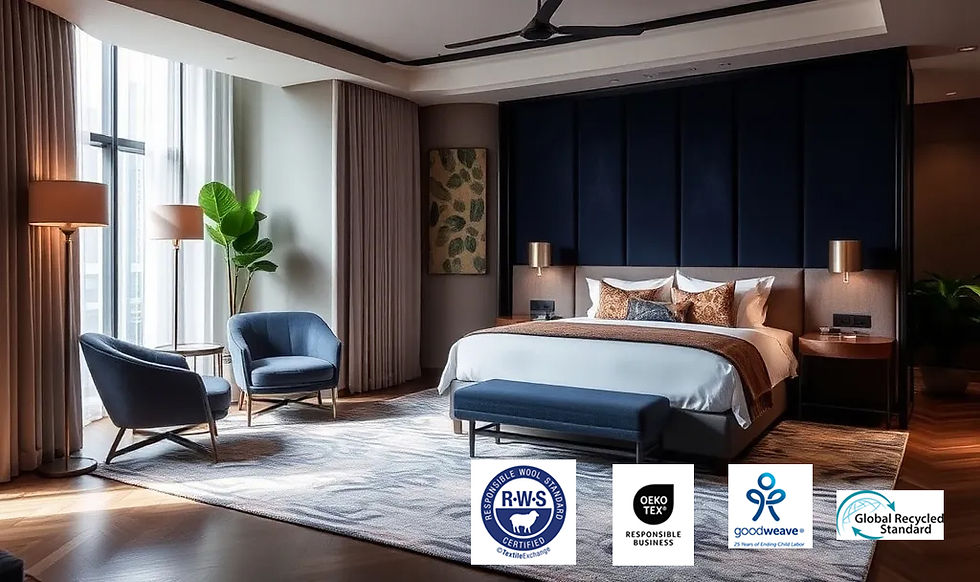
As B2B brands grow, they increasingly face demands for transparency from their own clients. Certified rug manufacturers are those that have submitted to independent audits and rigorous testing. Common certifications include:
GoodWeave: Guarantees no child, forced, or bonded labour was used in production.
OEKO-TEX®: Ensures the finished product contains no harmful chemicals.
ISO 9001: Confirms consistent quality management across all processes.
Manufacturers with these credentials allow B2B brands to confidently market their products as ethically and environmentally responsible. For a brand selling to hotels, schools, or corporate clients, this compliance can be the difference between winning and losing a contract.
Customization at Scale
The days of one-size-fits-all floor coverings are long gone. Custom rugs have become a standard expectation for designers and retailers who want to differentiate themselves. Indian manufacturers routinely produce bespoke pieces tailored to specific dimensions, colour palettes, and patterns. Whether a buyer needs a unique shape for an awkward architectural space or a proprietary design to match a brand’s identity, Indian workshops can deliver.
This capability extends to area rugs of any size, from small accent pieces to oversized installations spanning entire rooms. The same factories that produce intricate hand-knotted masterpieces also handle high-volume custom orders with remarkable efficiency.
Recurring Revenue Through Residential Collections
For B2B brands focused on the home decor market, living room rugs represent a particularly strong category. These products are frequently replaced as trends shift and as homeowners refresh their interiors. Indian manufacturers understand this rhythm and can help brands develop collections that align with current colour and pattern trends—whether warm minimalism, biophilic design, or quiet luxury.
By offering a steady pipeline of on-trend designs, rugs for retail brands become predictable revenue generators rather than one-off gambles. The manufacturer’s ability to scale production up or down based on sell-through rates gives retailers confidence to place larger initial orders.
Bulk Orders Without the Headaches
Perhaps the most practical advantage Indian manufacturers offer is their handling of bulk rug orders. Export-ready producers manage the entire logistics chain—from quality control and packaging to customs documentation and freight coordination. This export expertise reduces risk for B2B buyers and allows brands to focus on marketing and sales rather than supply chain firefighting.
For a growing brand, the difference between a supplier who merely ships goods and one who acts as a true partner is immense. The best Indian rug manufacturers offer design collaboration, material sourcing, sampling, and consistent quality across every repeat order. They become a competitive advantage, not just a vendor.
The Path Forward
Choosing the right Indian manufacturing partner requires diligence. Verify credentials, request physical samples, and commission independent factory audits before placing a first order. But for brands willing to invest that upfront effort, the rewards are substantial: authentic craftsmanship, ethical production, cost efficiency, and the scalability to grow from a small startup to a global player. In the world of B2B rugs, India is not just a sourcing destination. It is a launchpad.
1. What minimum order quantities (MOQs) can I expect when working with Indian rug manufacturers?
Unlike manufacturers in many other countries that demand large minimums, Indian producers often accommodate smaller batches. This flexibility allows growing B2B brands to test new collections, run limited editions, or fulfill small-batch private label orders without overcommitting capital. MOQs vary by manufacturer and construction method—hand-tufted rugs typically have lower MOQs than hand-knotted—but many suppliers are willing to negotiate for promising brand partners.
2. Can Indian manufacturers produce rugs under my own brand name without revealing their involvement?
Yes. Indian rug manufacturers excel at white-label and private label partnerships. They operate under strict non-disclosure agreements and can handle everything from custom pattern development to proprietary packaging. The final product carries only your branding, making them a seamless extension of your creative studio. This allows you to build a signature collection without investing in your own production infrastructure.
3. What certifications should I look for to ensure ethical and safe production?
Three key certifications matter most. GoodWeave guarantees no child, forced, or bonded labour was used. OEKO-TEX® ensures the finished rug contains no harmful chemicals, which is critical for hotels, schools, and homes. ISO 9001 confirms consistent quality management across all processes. Manufacturers with these credentials allow you to confidently market your rugs as ethically and environmentally responsible, which can be a deciding factor for institutional buyers.
4. How do Indian manufacturers handle custom rug orders for unique dimensions or designs?
Indian workshops routinely produce custom rugs tailored to specific sizes, colours, patterns, and even non-rectangular shapes. They offer design collaboration, material sourcing, and sampling services. Whether you need an area rug for an awkward architectural niche or a proprietary pattern for your brand identity, manufacturers can deliver. The same factories that produce hand-knotted masterpieces also manage high-volume custom orders efficiently.
5. What logistical support do Indian rug manufacturers provide for bulk orders?
Export-ready Indian manufacturers manage the entire logistics chain for bulk rug orders. This includes in-house quality control, professional packaging (rolling, wrapping, container loading), preparation of customs documentation (bill of lading, commercial invoice, certificate of origin), and freight coordination. This export expertise reduces risk for B2B buyers and allows you to focus on marketing and sales rather than supply chain firefighting.
Yes. Indian rug manufacturers excel at white-label and private label partnerships. They operate under strict non-disclosure agreements and can handle everything from custom pattern development to proprietary packaging. The final product carries only your branding, making them a seamless extension of your creative studio. This allows you to build a signature collection without investing in your own production infrastructure.
3. What certifications should I look for to ensure ethical and safe production?
Three key certifications matter most. GoodWeave guarantees no child, forced, or bonded labour was used. OEKO-TEX® ensures the finished rug contains no harmful chemicals, which is critical for hotels, schools, and homes. ISO 9001 confirms consistent quality management across all processes. Manufacturers with these credentials allow you to confidently market your rugs as ethically and environmentally responsible, which can be a deciding factor for institutional buyers.
4. How do Indian manufacturers handle custom rug orders for unique dimensions or designs?
Indian workshops routinely produce custom rugs tailored to specific sizes, colours, patterns, and even non-rectangular shapes. They offer design collaboration, material sourcing, and sampling services. Whether you need an area rug for an awkward architectural niche or a proprietary pattern for your brand identity, manufacturers can deliver. The same factories that produce hand-knotted masterpieces also manage high-volume custom orders efficiently.
5. What logistical support do Indian rug manufacturers provide for bulk orders?
Export-ready Indian manufacturers manage the entire logistics chain for bulk rug orders. This includes in-house quality control, professional packaging (rolling, wrapping, container loading), preparation of customs documentation (bill of lading, commercial invoice, certificate of origin), and freight coordination. This export expertise reduces risk for B2B buyers and allows you to focus on marketing and sales rather than supply chain firefighting.


Comments