


The Ultimate Guide to Buying Handmade Rugs Online: What to Look For?

Shopping for a floor covering from your sofa is convenient, but it also removes the ability to touch, smell, and see the product in person. Without those physical cues, how can you be certain you are investing in authentic craftsmanship rather than a mass‑produced imitation?
This guide walks you through every detail you need to examine before clicking “buy.” From construction methods to material secrets, you will learn exactly what separates a true treasure from a temporary placeholder.
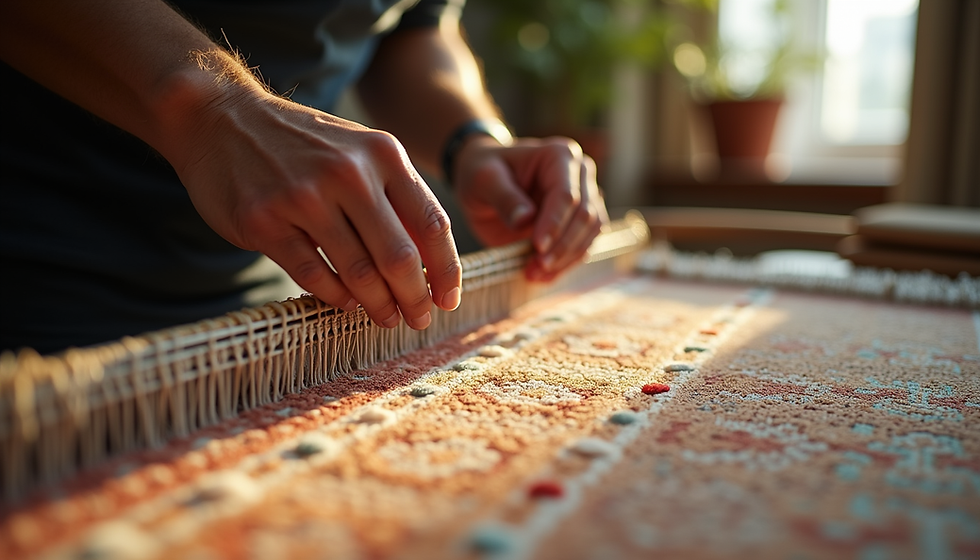
Start with Construction: Knotted vs. Tufted
The first and most important distinction is how the rug was made. Handmade rugs divide into two main families, each with different durability, texture, and price points.
Hand‑knotted rugs are woven on a loom, with each individual knot tied around warp threads by a skilled artisan. A single square metre can contain tens of thousands to millions of knots. These rugs are reversible, extremely durable, and often last for generations. They also carry higher price tags because of the weeks or months of labour involved.
Hand‑tufted rugs use a tufting gun to punch yarn through a backing fabric, which is then glued and backed with a secondary cloth. They are faster to produce, more affordable, and offer excellent design flexibility. However, they are not reversible and may have a shorter lifespan under heavy use.
When browsing online rugs, look for product descriptions that explicitly state the construction method. Vague terms like “handcrafted” or “artisan made” can hide machine‑assisted processes. Legitimate sellers will provide close‑up photos showing the back of the rug—knotted pieces reveal a clear grid of knots; tufted pieces show a glued backing.
Decode the Materials
The fibre determines how a rug feels, wears, and ages. Here are the most common options you will encounter.
Wool is the gold standard for most homes. It is naturally stain‑resistant, flame‑retardant, and bounces back from foot traffic. Silk adds a luminous sheen but is delicate and expensive. Cotton is often used for flatweaves and dhurries—lightweight and washable but less durable.
For those seeking texture and sustainability, jute rugs offer a coarse, natural look that works beautifully in coastal or bohemian interiors. Jute is biodegradable, affordable, and surprisingly strong, though it sheds fibres initially and does not like moisture.
A more exotic natural option is abaca rugs, woven from the fibres of a Philippine banana plant. Abaca is twice as strong as jute, resists saltwater damage, and has a silky, golden appearance. These rugs are rare outside specialty stores, so finding one online signals a truly distinctive purchase.
If environmental impact is your priority, look for eco‑friendly rugs made from recycled PET (plastic bottles), organic wool, or plant‑based fibres. Certifications like OEKO‑TEX® or Cradle to Cradle help verify genuine sustainability claims.
Recognize True Quality Through Visual Clues
Since you cannot touch the rug, you must train your eyes. High‑resolution photos are your best friend. Zoom in on the edges: a well‑made rug has a firm, tightly overcast selvage (side border) and a neat, finished fringe that is an extension of the warp, not sewn on afterwards.
Examine the pile for uniformity. In hand‑knotted rugs, slight variations in knot density across the surface are normal and indicate human touch. In hand‑tufted rugs, look for consistent carving and no bald patches where tufts have pulled away from the backing.
Colour is trickier online. Monitors vary, and natural dyes shift under different lighting. Request a physical swatch before committing to large orders. Serious designer rugs sellers will mail small samples for a nominal fee, refundable against purchase. If a seller refuses to provide samples, shop elsewhere.
Understand Sizing and Placement
Nothing disappoints more than a rug that looks tiny in your room. Always measure your space and mark the floor with painter’s tape before ordering.
Area rugs are typically defined as any rug that covers a defined zone within a room but does not reach the walls. For a living room, the rug should be large enough that all front legs of your sofas and chairs rest on it. A common mistake is buying a rug that is too small, making the furniture look disconnected.
Living room rugs specifically need to balance the seating arrangement. For a standard 10×12 ft room with a sofa and two armchairs, an 8×10 ft rug works well. For smaller spaces, a 5×7 ft or 6×9 ft piece can define a conversation area without overwhelming the floor.
Runners are for hallways and kitchens. Round rugs suit circular dining tables or entryways. Always read the product dimensions carefully and compare them to your floor plan.
Verify the Source and Ethics
Where a rug comes from tells you a lot about its quality. India has several renowned weaving clusters. A rug manufacturer from Bhadohi is worth noting because this region in Uttar Pradesh is often called the “carpet city of India.” Bhadohi and neighbouring Mirzapur produce a vast percentage of the world’s handmade floor coverings, with skills passed down through generations. Rugs from this region are known for their dense knotting and rich colour palettes.
However, provenance alone is not enough. You also need assurance that the rug was produced ethically. Look for GoodWeave certification, which guarantees no child or forced labour was involved. Many luxury rugs brands now prominently display their ethical credentials because their customers demand transparency.
Red Flags to Avoid
Be wary of listings that claim “genuine handmade” but show identical repeating patterns across multiple rug photos. That suggests a machine‑woven or printed piece. Also avoid sellers who cannot provide a clear return policy. Buying rugs online always carries the risk of colour or size mismatch; a 30‑day return window is standard.
Prices that seem too good for a large, hand‑knotted wool rug usually indicate a blend of synthetic fibres or a tufted piece mislabelled as knotted. Do your homework on typical market rates.
Final Checklist Before You Buy
Confirm construction: knotted or tufted?
Examine fibre: wool, silk, cotton, jute, abaca, or recycled?
Request a physical sample.
Measure your room and mark the intended footprint.
Verify the seller’s return and sample policy.
Look for ethical certifications like GoodWeave.
Read customer reviews that mention longevity and true colour.
Buying handmade rugs online can be deeply satisfying when you know what to look for. The rug that arrives at your door will not just be a floor covering—it will be a piece of art, a cultural artifact, and a daily companion. Take your time, ask questions, and trust your trained eye. The perfect rug is out there, waiting to be unrolled in your home.
1. How can I tell if an online rug is truly hand‑knotted and not just hand‑tufted?
Look for product descriptions that explicitly say “hand‑knotted” and check the back of the rug in close‑up photos. A genuine hand‑knotted rug shows a clear grid of individual knots on the reverse side and is fully reversible. Hand‑tufted rugs have a glued backing with a secondary cloth, and they are not reversible. If the listing only says “handcrafted” without specifying the method, ask the seller for a picture of the back before buying.
2. What is the most reliable way to judge colour and texture when buying a rug online?
Request a physical sample. Reputable online rug sellers offer small swatches (often for a nominal fee that is refundable against a purchase). Monitor settings vary widely, and natural dyes can look different in your home’s lighting than they do on a screen. Until you have touched the fibre and seen the colour in your room, never commit to a large or expensive order.
3. What size rug should I choose for my living room?
A common rule is that all front legs of your sofas and chairs should rest on the rug. For a typical 10×12 ft living room, an 8×10 ft area rug works well. Avoid buying a rug that is too small, as it makes furniture look disconnected. Always measure your space and use painter’s tape to mark the intended rug footprint on the floor before you order.
4. Why does it matter if a rug comes from Bhadohi, India?
Bhadohi is known as the “carpet city of India” and has produced handcrafted floor coverings for generations. A rug manufacturer from Bhadohi typically offers high knot density, rich colour palettes, and skills passed down through families. However, provenance alone is not enough. Always pair it with ethical certifications like GoodWeave to ensure no child or forced labour was used.
5. What are the biggest no options to avoid when buying handmade rugs online?
Avoid listings that show identical repeating patterns across multiple photos – that suggests machine‑woven or printed rugs. Also avoid sellers who refuse to provide a clear return policy (30‑day returns are standard). Prices that seem unrealistically low for a large, hand‑knotted wool rug often indicate synthetic blends or a tufted piece mislabeled as knotted. Finally, if the seller cannot mail a physical sample, shop elsewhere.


Comments