


Why Visiting Rug Factories in Person Matters (And How to Plan a Sourcing Trip to India)

Updated: Jul 23
Opening a box of factory samples is an exciting moment, but it's only the first step in building a reliable B2B supply chain. A photo of a rug on a website can't capture the tension of a loom, the scale of an operation, or the relationships that ensure quality control. Visiting your rug sources in person isn't just a nice idea—it's a strategic necessity.

Why the Ground Truth Matters
The difference between a good and a great manufacturing partner is often invisible in digital correspondence. A factory visit lets you see the actual working environment—how yarn is stored, the condition of the looms, the flow of the production floor. It allows you to meet the people tying each knot and building each carpet. Shaking the hand of the person who will weave your next hotel order builds a level of trust no email can replicate.
In-person visits also reveal critical capacity clues: Are the looms actually running, or did they stop weeks ago? Does the manufacturer stock their own certified wool, or do they source from unreliable intermediaries? These observations directly translate into supply chain security. For a truly efficient trip, consider working with a reputable factory made rugs exporter to pre-qualify potential partners before you travel.
A Roadmap of India's Carpet Heartland
Planning a sourcing trip to India is an adventure that requires smart logistical planning. The epicenter of the industry is in the central belt of Uttar Pradesh. Your journey should begin in the ancient, bustling city of Varanasi. From here, it's about a 45-to-60-minute drive to the neighboring district of Bhadohi, the "Carpet City of India". This small city and its surrounding villages house thousands of manufacturers, supplying over 90% of the nation's handmade rug exports. Many exporters are still family-run operations, with skills passed down through generations. Many also now offer vertically integrated operations spanning spinning, dyeing, and finishing.
When you go custom shopping for artisan made rugs, you will likely want to explore the nearby hand-tufting workshops of Mirzapur, which, together with Agra, forms another major production hub. To see traditional handmade rugs, don't miss the heritage workshops of Bhadohi.
During your factory visits, pay special attention to manufacturers offering custom rugs tailored to your exact specifications—size, colour, pattern, and even logo incorporation. Custom capabilities separate commodity suppliers from true partners. For sustainable and textured options, explore jute rugs, woven from fast‑growing, biodegradable plant fibres that bring earthy warmth to eco‑conscious projects. For humid or high‑traffic zones where jute may degrade, ask to see abaca rugs, crafted from Philippine banana leaf fibres. Abaca is twice as strong as jute, resists saltwater and mildew, and features a silky, golden lustre that elevates any space. A manufacturer that excels in custom, jute, and abaca production demonstrates material versatility and a commitment to meeting diverse commercial needs.
Your Practical Sourcing Itinerary
Knowing where to go and whom to trust is essential for rug sourcing. Your itinerary can be planned around the biannual India Carpet Expo for maximum efficiency—the next edition is scheduled for April 11-14, 2026, in New Delhi. This event gathers over 400 overseas buyers and hundreds of verified manufacturers under one roof.
For a custom, on-the-ground tour, many travel companies offer curated 3-day "craft tours" that combine the spiritual sights of Varanasi with factory visits in Bhadohi, including private vehicles and professional guides. A direct flight into Varanasi's Lal Bahadur Shastri International Airport is the most convenient entry point, from where many hotels and organizers can arrange the one-hour drive to Bhadohi. You should also use local trading platforms and directories to create a shortlist of Indian rugs suppliers before you travel.
What to Look For When You Arrive
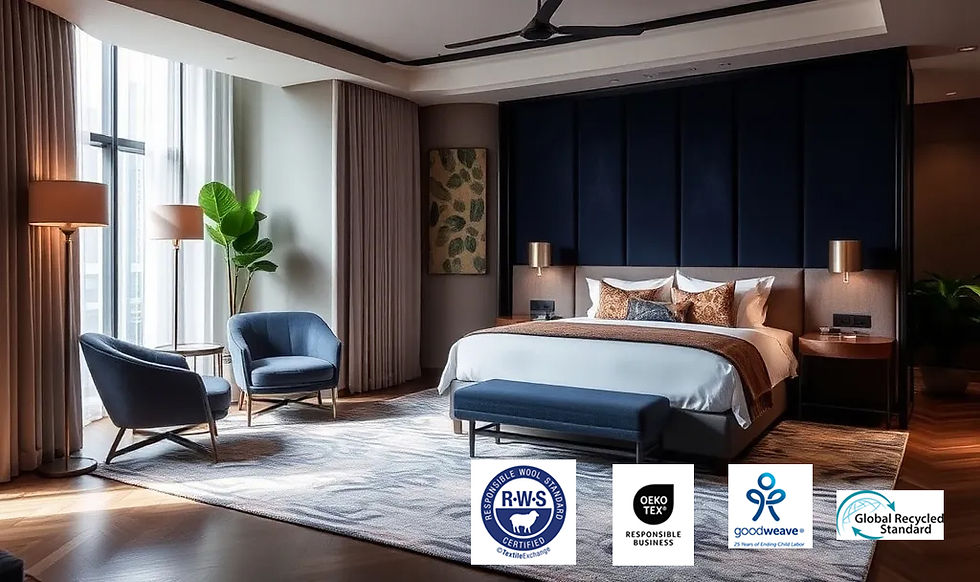
Once you arrive at a hand-knotted rugs workshop, move beyond the showroom. Ask to see the dye house and verify their color consistency protocols, looking for computer-aided dispensing instead of "eyeballing" the mixes. Inspect the welfare and working conditions in the weaving halls—are they well-lit, clean, and safe? In an era of global scrutiny, certifications like GoodWeave, OEKO-TEX, RWS, and GRS are non-negotiable. A manufacturer should be able to pull out a current, valid certificate on the spot.
Look for the Varanasi artisans behind the looms and ask them about their training and working hours. This human connection is often what transforms a standard B2B transaction into a long-term partnership. Finally, examine the finishing and packaging areas; a messy packaging section often signals a rushed final process.
To truly maximize your sourcing trip, consider timing your visit to coincide with one of India's major textile events. These gatherings bring hundreds of verified manufacturers and overseas buyers under one roof, offering an efficient way to assess the market.
One of the most important events for the floor covering sector is the India Carpet Expo, the flagship biannual event of the Carpet Export Promotion Council (CEPC). The 50th edition took place from April 11-14, 2026, at the NSIC Exhibition Complex in Okhla, New Delhi. It featured over 200 prominent handmade carpet manufacturers from key production hubs like Bhadohi, Mirzapur, Varanasi, Jaipur, and Srinagar. For a truly large-scale showcase, the Bharat Tex 2026 is essential. This event, the third edition, was scheduled for July 14-17, 2026, at the iconic Bharat Mandapam in New Delhi. This integrated textile fair covers the entire value chain, including floor coverings and carpets, and had an expected attendance of over 130,000 visitors and 7,000 international buyers. Additionally, for a more intimate experience focusing on artisan products, consider the HINDTEX event in Varanasi, which serves as a reverse buyer-seller meet for handlooms and handicrafts, often featuring carpets from the surrounding region.
From Factories to Future Orders
After your trip, create a detailed report on each manufacturer's capacity and compliance. The insights you gather directly inform your negotiation leverage and help you create a reliable risk assessment. In the world of B2B rug procurement, the trip to India isn't just a cost—it's an investment in quality, transparency, and a more resilient supply chain.
Working with a certified carpet manufacturer in India ensures quality, ethics, and reliable delivery for every project.
Book a visit with Pihue creations -


Comments