


Woven Identity: How Handcrafted, Custom‑Designed Rugs Turn Boutique Hotel Interiors into Narrative‑Driven, Art‑Filled Spaces That Guests Remember

Boutique hotels are no longer defined only by location or service quality. Today, guests expect immersive experiences shaped by thoughtful design, local character, and emotional comfort. Every material, texture, and furnishing choice contributes to the atmosphere visitors remember long after checkout.
Among the most influential elements in hospitality design is flooring. Rugs do far more than cover surfaces — they help define identity, guide spatial flow, soften acoustics, and create visual warmth. In boutique hospitality environments where individuality matters, tailored flooring solutions have become an essential part of interior storytelling.
This is why Custom rugs are increasingly being used by designers and hotel developers to create memorable guest experiences that feel distinct, luxurious, and authentic.

Boutique Hotels Prioritize Character Over Uniformity
Unlike large corporate chains that often rely on standardized interiors, boutique hotels thrive on uniqueness. Each property aims to create a recognizable personality through architecture, materials, artwork, and furnishings.
Flooring plays a major role in reinforcing that identity.
A carefully designed rug can:
Anchor a lobby space
Add intimacy to guest suites
Introduce regional influences
Highlight architectural features
Create visual continuity across interiors
This attention to detail is one reason why demand for Boutique hotel rugs continues growing across luxury hospitality markets.
Personalized flooring allows hotels to create spaces that feel curated rather than generic.
Rugs Help Shape the Guest Experience
Hospitality design is increasingly focused on emotional response. Guests may not consciously analyze flooring choices, but they immediately notice how a room feels.
Soft surfaces contribute to:
Warmth
Acoustic comfort
Visual layering
Relaxation
Perceived luxury
Flooring also affects how guests interact with a space. Plush textures encourage comfort, while natural woven surfaces create calm, organic atmospheres.
Thoughtfully selected Luxury area rugs often become central visual features within lounges, suites, reception areas, and private seating zones.
In boutique environments, these details help transform interiors into experiences rather than simply accommodations.
Customization Supports Unique Design Concepts
Every boutique hotel has different architectural requirements, layouts, and aesthetic goals. Standardized flooring sizes or patterns rarely align perfectly with these highly personalized spaces.
Tailored production allows designers to specify:
Exact dimensions
Color palettes
Material combinations
Shape configurations
Pattern placement
Surface textures
This flexibility makes bespoke flooring especially valuable for hospitality projects involving irregular layouts, statement spaces, or themed interiors.
Large hospitality developments also benefit from coordinated Project carpets that maintain consistency across guest rooms, suites, corridors, lounges, and public areas while still supporting the hotel’s individual design language.
Handmade Craftsmanship Adds Authenticity
Modern luxury travelers increasingly appreciate authenticity and craftsmanship. Mass-produced interiors often lack the warmth and individuality that boutique hospitality seeks to provide.
This has renewed interest in artisanal production techniques and naturally textured materials.
Using Handmade rugs allows hotels to introduce visible craftsmanship into their interiors, helping spaces feel more personal and curated.
Artisan-made flooring also complements broader hospitality trends focused on:
Cultural storytelling
Sustainable sourcing
Human-centered design
Natural materials
Slow luxury aesthetics
Guests today often value handcrafted details because they create a stronger emotional connection to a space.
Natural Fibers Bring Organic Sophistication
Natural textures continue gaining popularity in hospitality design because they help create calming, grounded environments.
Materials such as wool, jute, bamboo, silk, and plant-based fibers offer visual softness while maintaining a refined appearance.
For example, Abaca rugs are often used in boutique resorts and tropical-inspired interiors because of their durability and organic texture.
Similarly, Jute rugs contribute earthy warmth that pairs beautifully with wood, stone, and minimalist architectural finishes.
Many designers also favor Natural fiber rugs because they align with wellness-oriented hospitality concepts increasingly popular in luxury travel.
These materials help interiors feel more connected to nature while still maintaining sophistication.
Sustainable Design Is Influencing Hospitality Procurement
Sustainability has become a major factor in hospitality development decisions worldwide. Hotel operators increasingly seek products that support environmental responsibility while maintaining premium aesthetics.
This has increased demand for:
Ethically sourced materials
Recycled fibers
Low-impact production methods
Certified manufacturing systems
Designers and procurement teams now frequently prioritize Eco-friendly rugs as part of broader sustainability initiatives within hospitality projects.
Suppliers offering verified compliance standards often gain stronger interest from international hotel groups and luxury developers.

Certifications Build Buyer Confidence
Hospitality projects involve significant investment, making transparency and compliance especially important.
Hotels increasingly prefer working with suppliers capable of demonstrating internationally recognized certification standards.
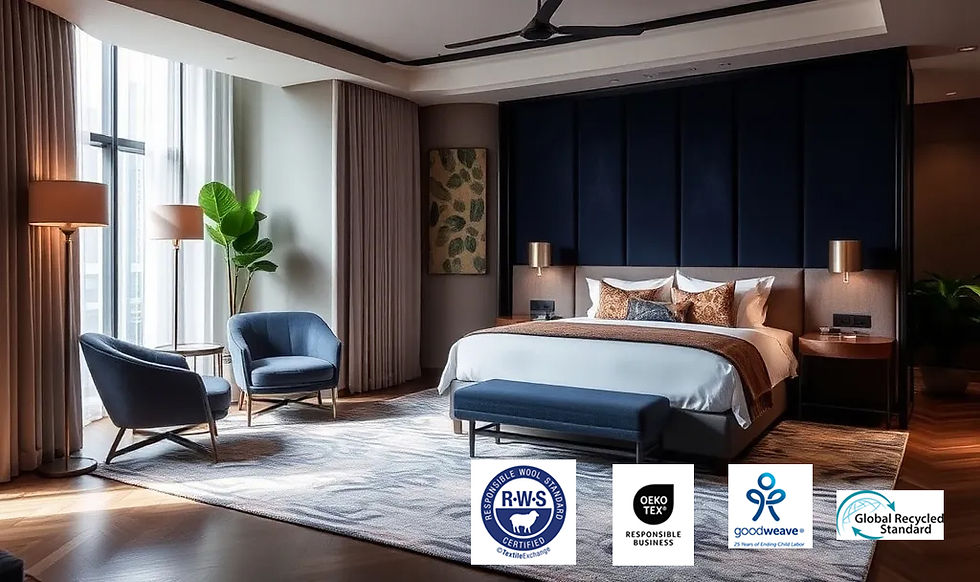
Manufacturers producing GRS RWS certified rugs help support sustainability-focused procurement by offering traceable recycled materials and responsibly sourced wool programs.
Likewise, OEKO-TEX® certified rugs provide reassurance regarding harmful substance testing and product safety standards, which many hospitality buyers now consider essential.
Ethical production also remains a priority, leading many developers to seek suppliers offering Good weave certified rugs that support socially responsible labor practices.
These certifications help hotels align interior sourcing decisions with broader ESG and sustainability objectives.
Flooring Influences Acoustic Comfort
Boutique hotels often prioritize intimate, peaceful environments where guests can relax away from busy urban surroundings.
Soft flooring materials help improve acoustic performance by reducing sound reflection and absorbing foot traffic noise.
This becomes especially important in:
Guest suites
Lounge areas
Corridors
Private dining spaces
Wellness environments
Layered flooring systems create quieter interiors while also contributing to the sense of comfort guests associate with premium hospitality experiences.
Material Selection Impacts Longevity
Hotel interiors must balance aesthetics with durability. Boutique properties experience continuous daily traffic, making material selection critical for long-term performance.
Experienced suppliers understand how to recommend appropriate constructions based on usage areas.
For example:
Silk rugs are often used in decorative or lower-traffic luxury zones because of their softness and sheen
Bamboo rugs offer lightweight texture and contemporary appeal
Dense woven constructions perform better in corridors and reception spaces
A dependable Premium rug manufacturer helps hospitality buyers select materials that maintain appearance while supporting operational durability.
Reliable Production Matters for Hospitality Projects
Large hospitality developments often involve multiple phases, tight timelines, and coordinated installations across different areas of a property.
Working with an experienced Bulk rug manufacturer helps ensure:
Consistent production quality
Accurate color matching
Timely delivery schedules
Reliable customization
Structured quality control
This reliability becomes especially important for hotels opening on fixed launch dates where delays can affect broader operational planning.
Consistent flooring production also simplifies future renovation or replacement projects.
The Future of Boutique Hospitality Design
As boutique hotels continue focusing on individuality, craftsmanship, and sensory experiences, customized flooring will remain a defining design element.
Guests increasingly seek spaces that feel personal, layered, and emotionally engaging rather than standardized or overly commercial.
Bespoke rugs support this evolution by combining artistry, comfort, sustainability, and functional performance into one cohesive design feature.
For hospitality developers, interior designers, and procurement professionals, custom flooring is no longer simply decorative. It has become an essential tool for shaping the atmosphere, identity, and lasting impression of modern boutique hotel interiors.


Unusual use case: I prompt a text-to-panorama tool for environment refs, then trace the composition by hand for picture-book spreads.
The 360 framing forces me out of my default two-page rectangle thinking, which is the whole point.