


How Factory-Direct Rug Sourcing Improves Profit Margins for Carpet and Rug Retailers

Every rug retailer knows the squeeze. You find a beautiful rug, check the wholesale price, add your markup, and realise that after shipping, warehousing, and marketing, your margin has shrunk to single digits. The culprit is often not your pricing—it is your supply chain. Each middleman adds a layer of cost. Factory‑direct sourcing eliminates those layers, putting the savings directly into your pocket. Here is how cutting out intermediaries transforms your bottom line.

The Traditional Path vs. The Direct Route
The conventional supply chain for floor coverings looks like this: manufacturer → exporter → importer → wholesaler → retailer → customer. Each stop adds a markup of 15–30%. By the time a rug reaches your showroom or warehouse, you are paying two to three times the factory gate price. Factory‑direct flips this model. You deal directly with a Rug and carpet manufacturer from India, the country responsible for 40% of global handmade carpet exports. No importer, no wholesaler. Just the maker and you.
How does this improve your margin? Simple. You pay the factory price plus freight and duties. That typically lands at 40–60% less than buying from a domestic wholesaler. You can either keep the same retail price and enjoy a much healthier margin, or lower your price to undercut competitors while still making more profit per unit.
Quality That Sells Itself
When you source directly, you are not just saving money. You are gaining access to superior products. Artisan made rugs from Indian workshops are crafted by artisans with generations of skill. A direct relationship allows you to specify materials, knot density, and finishing details that mass‑market wholesalers cannot offer. Your customers will notice the difference—and they will pay for it.
Customization Without the Premium
Wholesalers sell what is already made. You choose from their catalogue, often limited to popular sizes and colours. Factory‑direct changes that. You can order custom made rugs in your exact dimensions, your brand colours, and your unique patterns. And because there is no intermediary, custom work does not carry the typical 50–100% premium. You pay slightly more than stock designs, but you gain exclusivity that justifies a higher retail price.
Global Inspiration, Direct Source
One of the joys of direct sourcing is the ability to offer authentic global designs without travelling to a dozen countries. Indian manufacturers produce a stunning variety of international styles, all under one roof.
Moroccan rugs, with their Beni Ourain diamond patterns and creamy wool, remain perennial bestsellers. Sourcing them directly from an Indian workshop that specialises in Moroccan reproductions cuts out the North African middleman entirely.
Kashmiri carpets are the pinnacle of silk‑on‑silk craftsmanship. A direct partnership with a Kashmir‑connected manufacturer gives you access to these heirloom pieces at a fraction of boutique prices.
For lovers of clean lines and pale palettes, Scandinavian rugs are in high demand. Indian weavers have mastered the minimalist aesthetic—subtle textures, neutral colours, geometric simplicity—at production costs that Scandinavian mills cannot match.
The free‑spirited Boho rugs market is another opportunity. Direct sourcing lets you mix tribal motifs, fringe details, and vibrant colours without paying festival‑market markups.
Flatwoven Kilims are lightweight, reversible, and perfect for layering. A direct relationship with a kilim specialist means you can offer seasonal colourways without holding excessive inventory.

Natural Fibres at Wholesale Prices
Eco‑conscious customers expect natural materials. Direct sourcing makes those products profitable.
Jute rugs are affordable even at retail, but factory‑direct pricing turns them into high‑volume profit drivers. Jute is grown and woven in India, so you are buying at the source.
Abaca rugs are a premium natural fibre, twice as strong as jute with a silky golden sheen. Direct sourcing allows you to position abaca as a luxury eco‑option while maintaining a 50%+ margin.
Stocking Your Best Sellers
Area rugs are the backbone of most retailers’ inventory. A direct relationship with a manufacturer gives you control over which sizes you stock (2×3, 5×8, 8×10, runners) and which colours you feature each season. You are not limited to a wholesaler’s remaining stock.
Living room rugs are your highest‑volume category. By sourcing directly, you can offer the three most requested sizes (5×8, 6×9, 8×10) in a dozen neutral and jewel tones, all at prices that leave room for promotional discounts.
For luxury clients, Silk rugs are a high‑ticket, low‑volume category. A direct partnership with a silk rug specialist allows you to offer these masterpieces on a made‑to‑order basis, eliminating inventory risk while enjoying margins of 60–70%.
How to Get Started
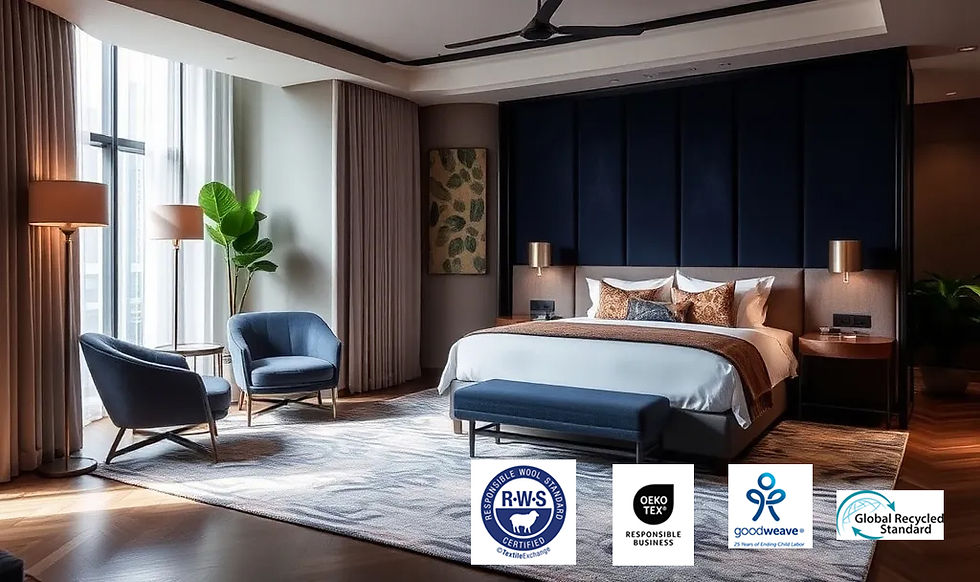
Factory‑direct sourcing requires more work upfront, but the ongoing benefits are substantial. Begin by identifying three to five Indian manufacturers that specialise in your target styles. Request samples and price lists. Compare their minimum order quantities, lead times, and certification documents (OEKO‑TEX®, GoodWeave, GRS). Visit the factory if possible, or hire a third‑party inspector.
Once you have selected a partner, start with a small test order—perhaps a single style in two sizes. Monitor quality, delivery, and customer feedback. As confidence grows, expand your assortment. Over time, you will replace most of your wholesale suppliers with direct relationships.
The Bottom Line
Every rug you sell has a fixed ceiling: what the market will bear. Your profit is what remains after you pay for the product. Factory‑direct sourcing lowers that product cost substantially, widening the gap between expense and revenue. The result is healthier margins, more competitive pricing, and a business that can weather market shifts. India’s rug manufacturers are ready to partner with you. The only question is: are you ready to stop paying middlemen?
1. How much can I realistically increase my profit margin by sourcing factory‑direct from India?
By eliminating importers, wholesalers, and other intermediaries, factory‑direct pricing typically lands at 40–60% less than buying from a domestic wholesaler. You can either maintain your current retail price and enjoy a significantly higher margin or reduce your price to undercut competitors while still making more profit per unit.
2. What are the minimum order quantities (MOQs) for factory‑direct custom rugs?
MOQs vary by manufacturer and construction method, but many Indian rug and carpet manufacturers offer flexible low MOQs for retail partners—sometimes as few as 50 pieces per design for stock rugs, and 10–20 pieces for custom rugs. For made‑to‑order silk rugs or large‑format area rugs, MOQs may be higher. Always ask for tiered pricing: the per‑unit cost drops significantly once you cross volume thresholds (e.g., 100, 500, 1,000 pieces).
3. How can I ensure quality when I cannot visit the factory in person?
Reputable factory‑direct suppliers provide third‑party certification documents (OEKO‑TEX®, GoodWeave, GRS, RWS) and are willing to work with independent inspection agencies like SGS or Bureau Veritas. Request pre‑shipment samples and quality hold points (e.g., inspections at 25%, 50%, and 75% of production). Many manufacturers also offer virtual factory tours and can connect you with existing retail clients for references.
Working with a certified carpet manufacturer in India ensures quality, ethics, and reliable delivery for every project.


Designer working on a music festival identity and I wanted kinetic moire backgrounds for animated posters. This pattern generator has enough parameter range that I didn't have to write my own p5.js sketch. Export PNG, import to AE, animate, done.