


How to Order Custom‑Shaped Rugs for Odd‑Sized Montessori Classrooms and Playrooms

Standard rectangular rugs work well for many spaces. But a Montessori classroom is not a standard space. It might have a circular reading nook, a winding train table, or a free‑form movement area. A home playroom might feature a loft with an awkward alcove. Off‑the‑shelf rectangles leave gaps, slip, or fail to define the intended zone. Custom‑shaped rugs solve this problem—and ordering them is simpler than you think.

Why Standard Shapes Don’t Fit
Montessori education emphasizes order, beauty, and purposeful design. Every material has its place, and every activity has its boundary. A rug that does not fit the floor plan disrupts that order. For playroom rugs, the stakes are lower but still important. Children need clear, soft boundaries for building blocks, puzzles, or pretend play. A rectangular rug pushed against a curved wall leaves a triangle of hard floor—a tripping hazard and a visual distraction.
School rugs in traditional classrooms also benefit from custom shapes. A semicircular rug under a smart board creates a focused viewing area. A kidney‑shaped rug around a reading corner defines the space without sharp corners where children might bump their heads. The investment in custom shaping returns dividends in safety, functionality, and aesthetic calm.
Understanding Custom‑Shaped Rugs
Custom‑shaped rugs are exactly what they sound like: floor coverings manufactured to your specific geometric or organic outline. Common shapes include circles, ovals, semicircles, quarter‑circles, teddy bears, racetracks, and free‑form blobs. You can also request cutouts—a rug with a hole in the middle for a column or a play kitchen island.
Manufacturers create custom shapes by first building a full rectangular or square rug, then cutting it to your template. The cut edge is then bound or overcast to prevent fraying. More advanced methods involve shaping the loom itself, but that is reserved for very large production runs. For most Montessori and home applications, post‑weave cutting with professional binding works perfectly.
Ideal Spaces for Custom Shapes
Kids room rugs often need to fit around furniture or under themed bed canopies. A circular rug under a teepee creates a cozy reading hideaway. A runner that follows the curve of a bunk bed ladder protects little feet during late‑night trips to the bathroom.
Montessori classroom rugs are the most demanding. The prepared environment requires rugs that outline workspaces without overlapping. A rectangular rug for a single child’s mat is fine. But a group activity might need a scalloped rug that lets five children sit facing each other without crowding. A long, narrow, rounded‑end “race track” rug defines the movement path for walking on the line. These shapes are rarely available in catalogues.
Materials That Withstand Play
Not every rug material suits high‑energy children. Handmade rugs are generally more durable than machine‑made because the knots are tighter and the fibres are compressed. However, for a classroom that sees 30 children daily, you want a construction that is also easy to clean. Wool is naturally stain‑resistant and flame‑retardant, but it requires professional cleaning for deep stains.
Colorful rugs serve two purposes: they attract children to the defined area, and they hide inevitable dirt between cleanings. Bright primary colors, pastel rainbows, or themed prints (maps, animals, alphabets) turn the rug into a learning tool. When ordering custom shapes, you can also customise the pattern—for example, a semicircular rug with a rainbow arc that matches the room’s decor.
The Case for Wool
Wool rugs offer the best balance of comfort, durability, and safety for children’s spaces. Wool is naturally flame‑resistant without chemical treatments. It resists crushing, so the rug remains soft even under heavy furniture. Wool also absorbs moisture without feeling damp, which is helpful for inevitable spills.
Wool does shed initially, especially if it is a loose weave. For a classroom, choose a dense, low‑pile wool rug (½ inch or less). High‑density wool (150+ KPSI) holds its shape during cutting and binding, producing clean edges that will not unravel.
Safety First: Non‑Toxic and Hypoallergenic
Parents and school administrators worry about what is in the rug. Kids safe rugs must meet rigorous chemical standards. The gold standard is OEKO‑TEX® Standard 100, which tests for over 350 harmful substances, including formaldehyde, lead, and allergenic dyes. Request the manufacturer’s current certificate before ordering.
For children with asthma or eczema, non‑toxic rugs go beyond OEKO‑TEX®. Look for rugs that use vegetable dyes and natural latex backings rather than synthetic adhesives. Avoid stain‑repellent treatments containing perfluorinated chemicals (PFAS). A simple, untreated wool rug is often the healthiest choice.
How to Order: A Step‑by‑Step Guide
Create a template. Use cardboard, foam board, or heavy paper to cut the exact shape you need. Mark the floor where the rug will sit. For large classrooms, consider using a digital floor plan and having the manufacturer generate a CAD file.
Choose your material. Wool is best for durability. For a softer feel, a wool‑nylon blend adds resilience. For a budget‑friendly option, recycled PET (polyester) is easy to clean but less flame‑resistant.
Select the pile height. Low pile (¼–½ inch) is easiest to vacuum and safest for wheelchairs and walkers. Medium pile (½–¾ inch) adds cushion for tumbling.
Decide on binding. Binding is the edge finishing that prevents fraying. Cotton binding is soft; polyester is more durable. Choose a contrasting colour for visibility (e.g., bright yellow binding on a blue rug) to mark the edge for children with low vision.
Place your order. Work directly with carpet and rug manufacturers from India who specialise in custom shapes. Provide your template dimensions, material choice, colour specifications, and binding type. Request a digital proof before production begins.
Plan for lead time. Custom‑shaped rugs take 8–12 weeks from approval to delivery. Order well before the school year starts or a room renovation is scheduled.
Installation and Maintenance
When your custom‑shaped rug arrives, unroll it in the intended space and let it lie flat for 24 hours to release any rolling memory. Use a double‑sided carpet tape or a non‑slip pad designed for your floor type to prevent shifting. Vacuum regularly with a beater bar turned off for the first month to reduce shedding.
For spot cleaning, blot spills immediately with a clean, dry cloth. Use a wool‑safe, fragrance‑free cleaner. Never rub, as that pushes the stain deeper into the fibres.
Certifiications that matter
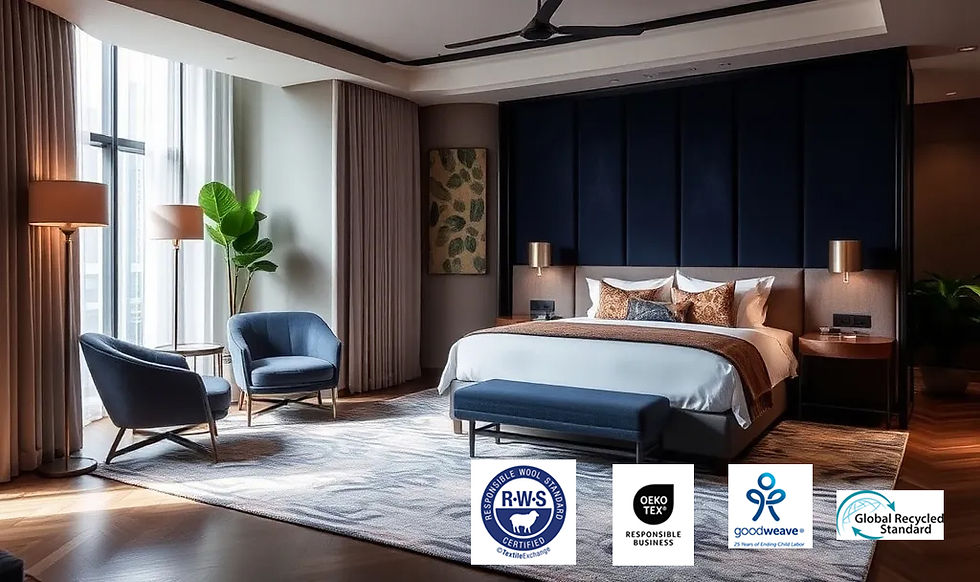
Beyond OEKO‑TEX®, serious buyers also look for GRS (Global Recycled Standard) and RWS (Responsible Wool Standard) certifications. GRS verifies recycled content and responsible processing—ideal for schools with zero‑waste goals. RWS guarantees that any wool used comes from farms practicing humane animal treatment and sustainable land management. Most critically for ethical procurement, GoodWeave certification ensures that no child labour, forced labour, or bonded labour was involved in the rug’s production. For Montessori classrooms that teach respect for people and the planet, a child‑labor‑free rug is not just a purchase; it is a lesson. When ordering custom‑shaped rugs, request documentation for all four certifications. A manufacturer that provides them has nothing to hide—and everything to be proud of.
Final Thoughts
A custom‑shaped rug turns an awkward space into a purposeful zone. Whether you are outfitting a Montessori classroom, a colourful playroom, or a themed kids’ bedroom, the process is straightforward and the results are transformative. Partner with a manufacturer that understands safety certifications, offers material transparency, and has experience cutting and binding unusual geometries. Your children—and your floor plan—will thank you.


Comments