


Large-Scale Carpet Projects: Managing Consistency Across Multiple Locations

Large hospitality and commercial developments rarely operate from a single address. International hotel chains, corporate campuses, luxury resorts, co-working brands, and exhibition organizers often manage interior projects spread across cities or even continents. In these situations, flooring consistency becomes more than a design preference—it becomes part of the brand identity.
For procurement teams and interior designers, maintaining uniformity across multiple properties can be challenging. Variations in color, texture, weave density, sizing, or finishing can affect the visual harmony of an entire project. This is why choosing experienced partners for large flooring programs is critical when planning multi-location installations.
Whether the requirement involves boutique hospitality spaces, executive offices, or expansive event venues, consistency must be carefully managed from concept to installation.

Why Consistency Matters in Multi-Location Projects
When guests walk into different branches of the same hotel or workspace brand, they expect a familiar visual experience. Flooring plays a major role in shaping that perception. Even small differences between production batches can become noticeable when projects are installed side by side across multiple properties.
For designers, maintaining cohesive flooring specifications helps preserve the intended interior aesthetic. For procurement managers, consistency reduces replacement complications and simplifies future expansion projects.
This becomes especially important in developments involving Large Scale carpet projects, where production may continue over several months and multiple delivery phases.
Starting With Centralized Design Specifications
The foundation of consistency begins with detailed technical planning. Successful commercial flooring programs usually rely on centralized specifications that clearly define:
Material composition
Pile height
Weave structure
Dye references
Texture requirements
Finishing methods
Border detailing
Shape and dimensions
Manufacturers capable of producing Custom rugs for commercial applications often create standardized production documents before weaving begins. These serve as reference guides throughout the entire manufacturing cycle.
For projects involving Large area rugs or coordinated layouts across different properties, exact repeatability becomes essential.
Material Selection and Uniformity
One of the biggest causes of inconsistency in flooring production is raw material variation. Natural fibers can differ slightly between batches if sourcing methods are not carefully controlled.
Professional suppliers maintain consistent procurement channels for wool, silk, cotton, and natural blends to reduce visual differences. This becomes especially important when creating premium Hotel rugs or luxury installations requiring identical finishes across multiple spaces.
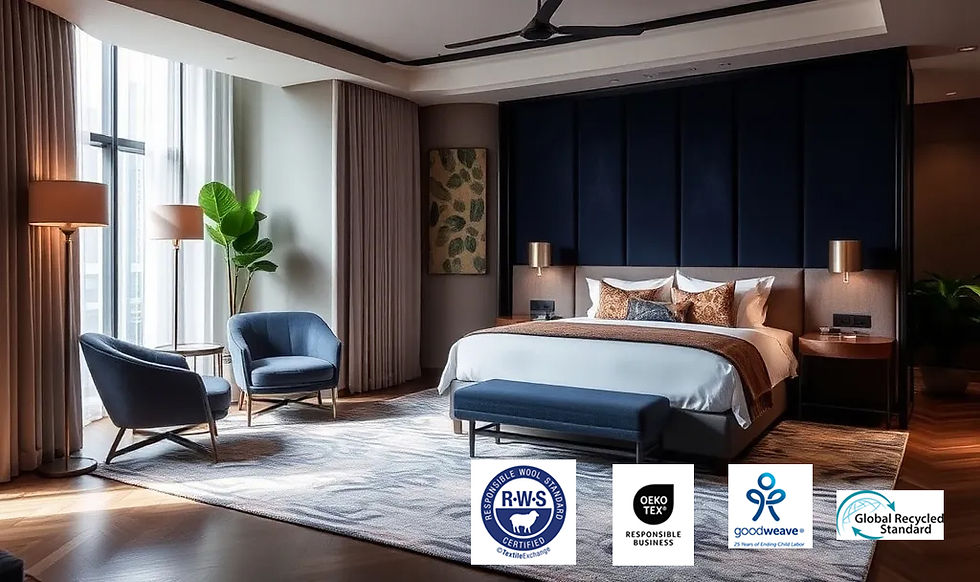
Companies working with sustainability-focused procurement teams increasingly prioritize traceable materials through RWS GRS certified rug manufacturers. These certifications support standardized sourcing practices while also meeting environmental and ethical expectations.
In hospitality environments, consistent material quality also affects long-term durability, maintenance performance, and guest satisfaction.
The Role of Dyeing and Color Matching
Color inconsistency is one of the most common concerns in large commercial flooring programs. Lighting conditions vary from property to property, making even slight dye differences more visible.
To avoid this issue, experienced production teams use controlled dyeing systems with strict color calibration procedures. Lab dip approvals and physical strike-offs are often finalized before bulk production begins.
For premium interior projects using Silk rugs, maintaining tonal accuracy is especially important because silk fibers reflect light differently depending on pile direction and room illumination.
Reliable suppliers also archive dye formulas and approved production samples for future repeat orders. This allows expansions or renovations to maintain visual continuity years after the original installation.
Production Planning for Multiple Installations
Large commercial developments rarely require delivery to a single destination. Projects may involve phased construction schedules, regional distribution centers, or simultaneous installations in different countries.
This is where organized manufacturing systems become essential.
Experienced Bulk rug suppliers typically divide production into controlled batches while maintaining the same specifications throughout the process. Dedicated quality-control checkpoints ensure that each phase matches approved standards before shipping.
This structured approach is particularly valuable for:
Rugs for Resorts
Multi-property hospitality groups
Corporate offices
Convention centers
International retail chains
Without careful planning, even small production differences can become noticeable once installations are completed.
Choosing the Right Construction Method
Different commercial environments require different construction techniques. Selecting the appropriate method helps maintain performance consistency across all locations.
For luxury hospitality projects, Hand-knotted rugs are often preferred because of their durability and intricate craftsmanship. They work particularly well in executive suites, premium lounges, and high-end residential hospitality spaces.
Meanwhile, Hand-tufted rugs are widely used in larger commercial developments because they allow faster production while still achieving sophisticated visual results.
In areas with heavy foot traffic, durability must be balanced with appearance. Proper construction selection helps ensure flooring performs consistently across all branches of a project.
Sustainability and Certification Standards
Modern commercial buyers increasingly prioritize environmental compliance alongside design quality. Global hospitality brands, architects, and procurement firms often require documented sustainability practices before approving suppliers.
This has increased demand for:
OEKO-TEX® certified rugs
Ethical production systems
Traceable material sourcing
Responsible dyeing processes
Certifications help maintain not only environmental standards but also manufacturing consistency. Suppliers operating under internationally recognized frameworks typically follow more structured production protocols, which reduces variability between batches.
For large-scale commercial projects, this added reliability becomes a major advantage.
Managing Logistics Across Multiple Destinations
Coordinating shipping schedules for large flooring programs requires careful logistical planning. Delays at one property can affect installation schedules across an entire project network.
Professional manufacturers usually provide:
Batch labeling systems
Installation coding
Sequential packing methods
Shipment tracking documentation
Replacement reserves for future maintenance
These systems become especially important for projects involving Runner rugs in corridors, connected suites, or repeated layout patterns across multiple locations.
Trade exhibitions and temporary installations also benefit from organized logistics. Flooring used in global exhibitions and corporate events often needs rapid deployment and consistent branding, making Tradeshow rugs an increasingly specialized commercial category.
Quality Control Before Dispatch
The final inspection phase is critical in maintaining project-wide consistency. Reliable manufacturers conduct detailed evaluations before packaging and export.
Typical inspections include:
Size verification
Color comparison
Surface finishing review
Edge alignment checks
Texture consistency analysis
Backing and finishing inspection
For premium Handmade rugs, these inspections help preserve craftsmanship quality while ensuring uniformity across the full order.
Photographic approvals and digital reporting also help international buyers monitor production remotely before shipments leave the factory.
Building Long-Term Supplier Partnerships
Consistency becomes easier when buyers establish long-term relationships with experienced manufacturing partners. Suppliers familiar with a client’s specifications can replicate previous collections more efficiently during future expansions or renovations.
This continuity benefits:
Interior design firms
Hospitality procurement teams
Global retailers
Commercial developers
Reliable production partnerships reduce communication gaps, improve forecasting accuracy, and simplify repeat ordering.
For international commercial projects, flooring consistency is not achieved by chance. It requires coordinated sourcing, disciplined production systems, controlled dyeing processes, detailed quality management, and dependable logistics.
As hospitality and commercial interiors continue expanding across global markets, maintaining visual and technical uniformity will remain one of the most important factors in successful flooring procurement.


Comments