


Custom Rugs for Boutique Hotels, Retreats, and Resorts

In 2026, luxury hospitality is defined by authenticity. Guests no longer seek standardised stays; they desire meaningful travel experiences rooted in thoughtful design and ethical sourcing. For boutique hotels, wellness retreats, and secluded resorts, every design element contributes to a cohesive narrative. Floor coverings, often overlooked, have emerged as foundational components capable of transforming interiors from merely functional to genuinely memorable.
This shift has propelled custom rugs to the forefront of hospitality design. Unlike mass-produced alternatives with limited designs and standard dimensions, bespoke pieces offer complete flexibility in size, colour, and texture, allowing properties to reflect their unique identity. From the lobby to the guest suite, these tailored creations align interiors with architectural features and brand narratives, ensuring visual continuity across all areas.

Defining the Design Direction
Three interconnected trends are shaping bespoke hospitality flooring in 2026.
Biophilic Design integrates natural elements into the built environment. For a coastal hotel, this might mean a custom rug with an undulating wave pattern in seafoam, navy, and sand. A mountain lodge could feature a topographic design or a textured weave mimicking forest moss. This approach reduces guest stress and enhances well-being while reinforcing the property's sense of place.
Abstract Expressionism moves away from repetitive patterns toward designs that evoke emotion. These rugs act as focal points, resembling painterly canvases on the floor. They feel contemporary and upscale, appealing to design-savvy travellers, and can be tailored to any colour scheme.
Art-Inspired Narratives embed local culture directly into the guest experience. A property in Rajasthan might feature jute creations with patterns derived from traditional block prints, while a resort in Kerala could incorporate motifs from local costume or landscape. This storytelling adds depth and character that no machine can replicate.
Material Selection: Balancing Aesthetics and Performance
Hospitality environments demand materials that feel inviting yet withstand constant use. The choice of fibre directly impacts durability, maintenance, and guest perception.
Handmade Wool rugs remain a preferred choice for high-traffic zones. New Zealand wool, in particular, is valued for its resilience, natural stain resistance, and ability to maintain structure over time. These qualities make wool ideal for corridors, lounges, and public seating areas where durability is essential.
Natural fibre floor coverings bring organic texture and a grounded elegance to interiors. Sisal offers a muted, durable surface that performs well under foot traffic. Jute introduces warmth and casual elegance, making it ideal for relaxed dining spaces and beachfront properties. Abaca, derived from banana tree leaves, provides a smooth, lustrous surface that suits eco-conscious wellness retreats. These materials soften acoustics, reduce echo, and make large interiors feel calmer and more intimate.
Hand-knotted rugs are prized for their longevity and intricate detailing, making them ideal for signature spaces like presidential suites or executive lounges. Hand-tufted carpets offer a balance of design flexibility and durability, suitable for lobbies and restaurants where visual impact must align with performance.
The Customisation Process
Working with an area rug manufacturer that specialises in hospitality projects ensures a smooth journey from concept to installation.
The process typically begins with sharing a concept—a hand-drawn sketch, digital artwork, reference image, or mood board. The manufacturer translates this idea into technical weaving instructions. Material selection follows, with options ranging from certified wool to natural jute and abaca, each processed under compliance standards ensuring safe dyes and finishing treatments.
Most manufacturers create a small strike-off sample before bulk production, allowing confirmation of colours, texture, and overall finish. Large rugs for expansive lobbies or custom dimensions for irregular floor plans can be accommodated. Production timelines vary: hand-tufted pieces typically require four to six months, while handmade carpet constructions may take five to twelve months depending on complexity and knot density.
Certification: Safety and Credibility
For boutique hotels and resorts, certification is no longer optional—it is a baseline expectation. An OEKO-TEX® certified rug manufacturer ensures that products are tested for harmful substances, restricted chemicals, and dyes that could affect human health. This compliance provides safer indoor air quality for guests and aligns with global safety expectations.
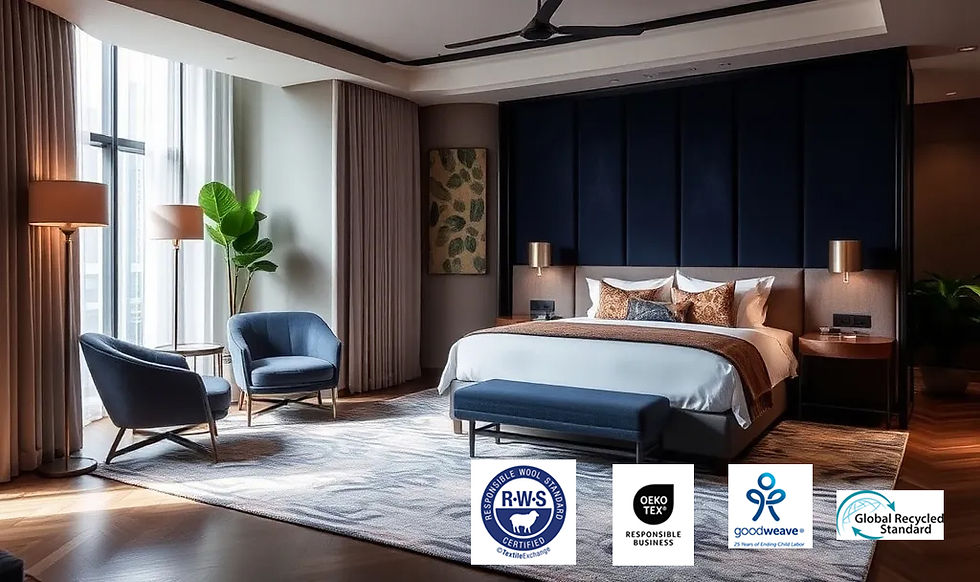
Additional certifications like GoodWeave guarantee child-labour-free supply chains, while GRS and RWS validate recycled content and ethical wool sourcing respectively. Many international buyers now require certification documentation before placing bulk orders. Choosing a manufacturer experienced with compliance simplifies the process significantly.
Partnering with Bhadohi
Bhadohi, India's carpet capital, has built a global reputation for craftsmanship, scale, and compliance. Manufacturers here combine generations of weaving expertise with modern production capabilities. The ecosystem includes spinning units, dyeing facilities, washing plants, and finishing centres—all working together to maintain quality control from raw fibre to finished product.
Whether designing for an intimate boutique hotel, a sprawling resort, or a secluded wellness retreat, Bhadohi's Jute rug manufacturers offer the creative freedom and responsible manufacturing that today's hospitality industry demands.
Partner with certified rug manufacturers from Bhadohi to create bespoke floor coverings that define your property's identity. Book a consultation for your next hospitality project.


I really enjoyed the insights into how custom rugs can shape the atmosphere of boutique hotels and retreats. I often sketch interior design ideas by hand, and converting handwritten design notes into text makes it much easier to organize and revisit creative concepts.