


How We Transformed a 20‑Suite Boutique Hotel in Under 4 Months with Our Bespoke Rugs

When the owner of a 20‑suite boutique hotel in coastal Portugal called us, she had a problem. Her renovation loan came through later than expected, leaving just four months until the grand reopening. The existing flooring was tired, stained, and mismatched. She needed a complete floor covering refresh—lobby, corridors, restaurant, and every suite—delivered and installed on an impossible timeline.
Our answer? A full custom program built around custom rugs, rapid sampling, and a logistics plan that accounted for every square metre. Below is the story of how we pulled it off, and the certified, handcrafted solutions that made the property unforgettable.

The Challenge: One Hotel, Six Zones, Four Months
The property, a converted 19th‑century manor, had thirty‑six distinct floor areas requiring new rugs. The design brief demanded a cohesive palette of warm terracotta, sea foam, and cream, with patterns that referenced local azulejo tiles. Every rug needed to be durable enough for heavy summer traffic yet soft enough underfoot for barefoot mornings.
Our first step was a virtual walk‑through with the interior designer. We mapped each zone, noting traffic levels, sunlight exposure, and existing furniture. Within one week, we produced digital renderings for all thirty‑six placements. The client approved twenty‑two designs immediately; the remaining fourteen required two rounds of colour adjustments.
Handcrafted Solutions for Every Space
Handmade rugs formed the backbone of the project, but we varied construction methods by zone to balance budget and durability.
For the six executive suites, we specified hotel rugs with a 100‑knot hand‑tufted construction using New Zealand wool. The medium pile felt plush, while the dense tufting resisted crushing from luggage wheels. Each suite received a unique geometric pattern based on traditional Portuguese pavement motifs.
The twelve standard suites received a simpler, cut‑and‑loop design. By using a wool‑nylon blend, we added stain resistance without sacrificing softness. The neutral cream background with terracotta diamonds brightened the small rooms, making them feel larger.
The restaurant and bar area demanded something special. Here we installed a large, central medallion design hand‑knotted in a wool‑silk blend. The silk added a subtle sheen that caught candlelight, while the high knot density (150 KPSI) ensured the rug would survive nightly dinner service.
The Lobby: A First Impression That Lasts
Boutique rugs need to make a statement. For the lobby, we created an oversized circular piece featuring an abstract wave pattern in navy and seafoam. The 4‑metre diameter required a specialised loom, but our partner rug manufacturer from India had the capability. The finished rug arrived rolled on a wooden core, and the installation team laid it in under two hours.
The lobby also featured a long runner in the check‑in area. We used a flatweave construction for this zone because it withstands rolling suitcases better than a plush pile. The runner’s subtle stripe pattern concealed dirt between cleanings.
Regional Heritage Meets Global Standards
The owner wanted to honour local craft traditions. We recommended several Bhadohi rugs for their dense knotting and rich colour saturation. Bhadohi’s weavers have produced floor coverings for royal palaces and global hotels alike, and their skills translated perfectly to the project’s intricate geometric patterns.
For corridors and less formal areas, we included a few Persian carpets from our vintage collection. These one‑of‑a‑kind pieces, sourced from northern Iran, added warmth and authenticity. Each was professionally cleaned and repaired before installation, and the client used them to create focal points at corridor intersections.
Zone‑Specific Selections
Lobby rugs required the highest durability. We chose a low‑pile, solution‑dyed nylon construction for the main walkway—unseen by guests but essential for longevity. The statement circular piece, as noted, was hand‑knotted wool.
In the owner’s private penthouse suite, we installed silk rugs in a pale grey with cream detailing. Pure silk is delicate, but the suite sees minimal traffic. The result was a luminous, almost liquid surface that drew gasps from visiting designers.
For the poolside changing rooms and spa, moisture resistance was critical. Here we used jute rugs with an outdoor‑rated backing. Jute’s natural golden colour complemented the terracotta tiles, and the fibre’s breathability prevented mildew. The client loved the organic texture against the cool stone floors.
The yoga pavilion required a different solution. We recommended abaca rugs, woven from Philippine banana fibres. Abaca is twice as strong as jute, resists humidity, and has a silky, golden appearance. The pavilion’s abaca rug held up to daily barefoot practice and remained beautiful throughout the humid summer.
Certifications That Built Trust
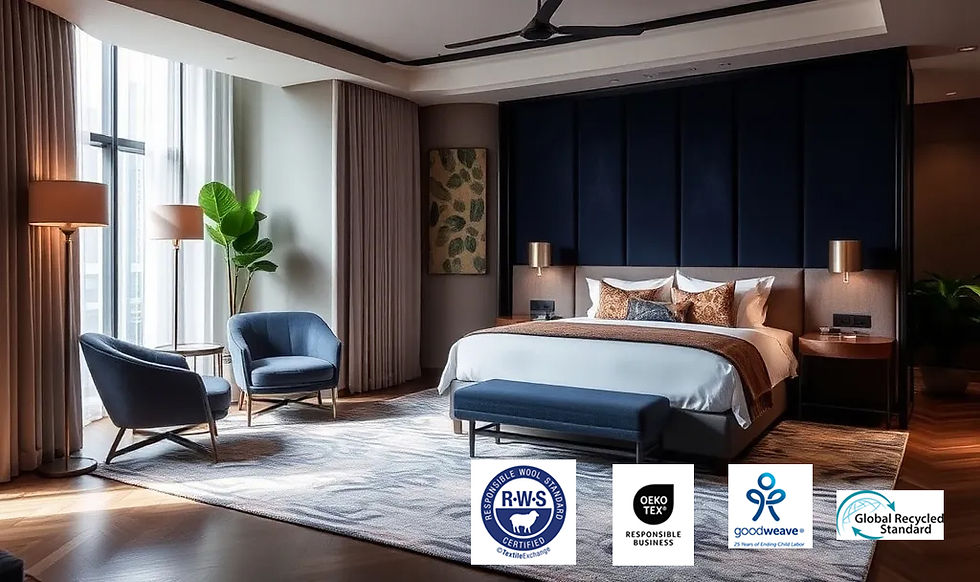
The hotel chain’s parent company required documented sustainability for all renovations. We provided third‑party verification from two major standards.
RWS and GRS Certified Rugs covered the wool and recycled content in our products. RWS (Responsible Wool Standard) guaranteed ethical animal welfare on the sheep farms; GRS (Global Recycled Standard) verified that 35% of the backing fabric came from post‑consumer recycled plastic bottles. These certifications appeared in the hotel’s marketing materials, attracting eco‑conscious travellers.
Additionally, all rugs installed in guest rooms and public areas were oeko tex certified rugs. OEKO‑TEX® testing confirmed that no harmful chemicals—formaldehyde, lead, allergenic dyes—were present. The hotel received a compliance certificate to show health inspectors, and guests with chemical sensitivities could book with confidence.
The Result: On Time, On Budget, Unforgettable
The final rug was installed on day 112—just eight days before the grand reopening. The client held a preview for local media, and the transformation made the front page of the regional lifestyle section. Bookings for the following summer increased 40% compared to the previous year.
Guests regularly comment on the floors. Instagram photos of the lobby medallion and the silk‑sheened executive suites have become a marketing asset. And the owner has already contacted us about a second property.
From a frantic phone call to a showcase renovation, this project proved that ambitious custom work is possible on tight timelines. The keys? Clear communication, fast sampling, and a manufacturer that treats every order—even urgent ones—with the same care as a palace commission. If you have a hotel project, no matter the deadline, we are ready to weave.
1. How did you manage to design, produce, and install custom rugs for a 20‑suite hotel in only four months?
We used a streamlined process: a virtual walk‑through with the designer, digital renderings for all zones within one week, and rapid sampling. By varying construction methods (hand‑tufted for most suites, hand‑knotted for statement pieces) and working with a vertically integrated rug manufacturer from India, we eliminated delays. Parallel workflows—sampling while sourcing materials, weaving while finalising colours—compressed the timeline without sacrificing quality.
2. What types of rugs did you install in different areas of the hotel?
Executive suites: Hand‑tufted New Zealand wool with medium pile and 100‑knot density for durability and plushness.
Standard suites: Wool‑nylon blend, cut‑and‑loop design for stain resistance and a bright, spacious feel.
Restaurant/bar: Hand‑knotted wool‑silk blend with a central medallion for candlelit elegance.
Lobby: Oversized circular hand‑knotted wool rug with abstract wave pattern, plus a flatweave runner in the check‑in area.
Owner’s penthouse: Pure silk rugs in pale grey with cream detailing.
Spa & pool changing rooms: Jute rugs with outdoor‑rated backing for moisture resistance.
Yoga pavilion: Abaca rugs (banana fibre) for humidity resistance and silky texture.
3. How did you ensure the rugs met sustainability and health standards?
All rugs carried third‑party certifications:
RWS (Responsible Wool Standard): Guaranteed ethical animal welfare and sustainable land management for wool.
GRS (Global Recycled Standard): Verified that 35% of backing fabric came from recycled PET bottles.
OEKO‑TEX® Certified: Confirmed no harmful chemicals (formaldehyde, lead, allergenic dyes) were present, ensuring safe indoor air quality for guests.
These certifications helped the hotel attract eco‑conscious travellers and satisfy corporate ESG requirements.
4. Were the rugs durable enough for high‑traffic hotel use?
Yes. We matched construction to traffic levels:
Lobby walkways: Low‑pile, solution‑dyed nylon – extremely durable and stain‑resistant.
Restaurant bar area: High‑density hand‑knotted (150 KPSI) wool‑silk blend – survives nightly service.
Corridors: Flatweave or low‑pile wool blends – resist crushing from luggage wheels.
Suites: Hand‑tufted with dense tufting (100 knots per square inch) – stands up to regular turnover cleaning.
We also provided maintenance guidelines, including regular vacuuming and professional deep cleaning every 12–18 months.
5. Can you replicate this fast turnaround for other hotel projects?
Clear communication – virtual walk‑throughs, digital renderings, and rapid colour approvals.
Flexible manufacturer – one that offers hand‑tufted (faster) alongside hand‑knotted (more intricate) options.
Stocked materials – having certified wool, silk, jute, and abaca readily available.
Logistics planning – coordinating container shipping and on‑site installation well in advance.
For a 20‑suite property, we can typically deliver in 3–4 months. Smaller projects (5–10 suites) may take as little as 8–10 weeks. Contact us with your timeline, and we will provide a custom production schedule.


Comments